Crusty Tangy Sourdough Bread Made with a Live Starter
A sourdough starter behaves nothing like store-bought yeast, it needs to be fed, watched, and trusted before it can lift a loaf on its own. Once it’s active and bubbly, though, it rewards you with a crust that shatters and a crumb full of open, irregular holes no packet of yeast can copy.

Why You Will Love This Recipe
- A naturally tangy flavor that develops entirely from the starter, no added yeast.
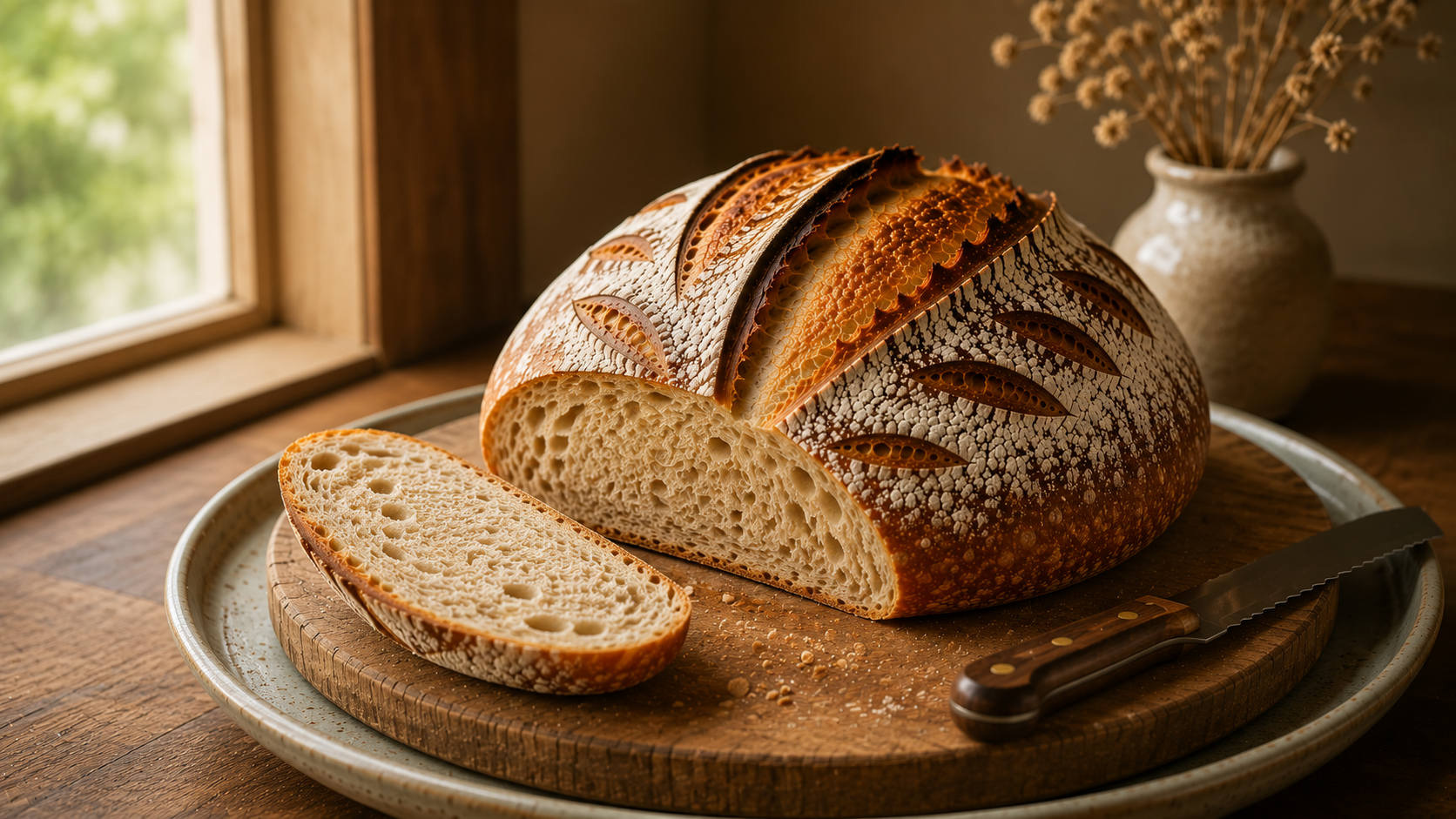
- A crackly, deeply golden crust with an open, airy crumb inside.
- Long fermentation makes the bread easier to digest for many people.
- Only four ingredients, flour, water, salt, and starter.
- Freezes beautifully, so one bake stretches across weeks.
Ingredients
- 1 cup active sourdough starter, bubbly and recently fed
- 1 1/2 cups warm water, about 90°F
- 4 cups bread flour
- 2 teaspoons fine salt
- Extra flour, for dusting and shaping

Crockery and Time To Create
You will need a large mixing bowl, a bench scraper, a banneton or a bowl lined with a floured towel, a Dutch oven, and a sharp lame or razor for scoring. Prep time is 30 minutes and cook time is 45 minutes, for a total active time of 75 minutes. The dough also needs about 5 to 6 hours to bulk ferment and 12 to 14 hours to cold proof overnight, which is not included in the active time. This recipe makes one loaf and serves 12.
Ingredient Substitutions and Variations
- Bread flour: swap for all-purpose flour for a slightly softer crumb and a less chewy bite.
- Fine salt: swap for kosher salt, using slightly more since it is less concentrated by volume.
- Warm water: swap for filtered water if your tap water is heavily chlorinated, which can slow fermentation.
- Bread flour: swap 1 cup for whole wheat flour for a heartier, more rustic loaf.
- Sourdough starter: swap for a rye starter for a deeper, more pronounced tang.
Step-by-Step Instructions
Mix the Dough
In a large bowl, combine the active starter and warm water, stirring until the starter dissolves slightly. Add the flour and salt, then mix by hand until a shaggy, rough dough forms with no dry flour remaining.
Rest the Dough
Cover the bowl and let the dough rest for 30 minutes, this short rest allows the flour to fully hydrate before the stretching begins.
Stretch and Fold
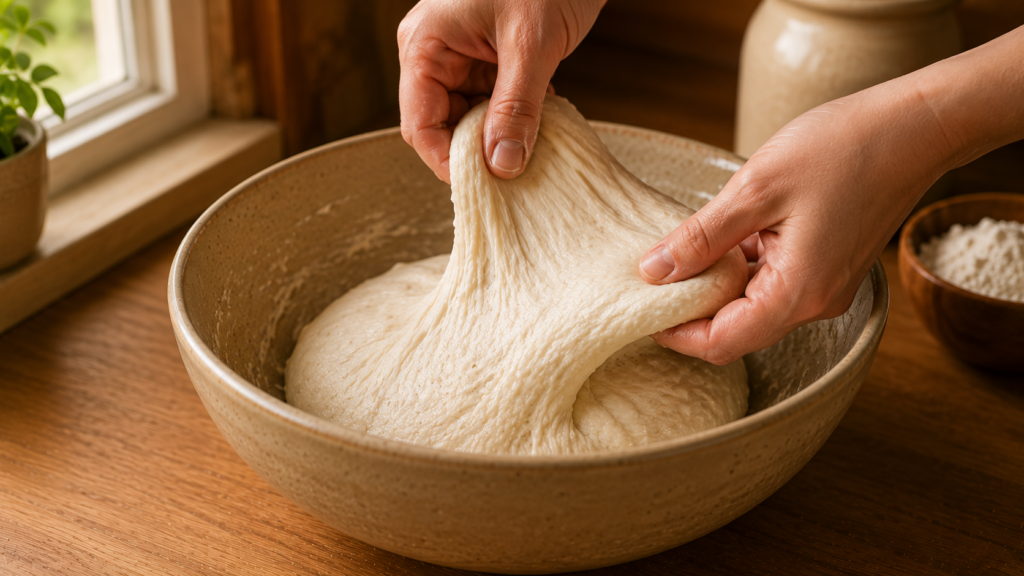
Every 30 minutes over the next 2 hours, reach into the bowl, stretch one side of the dough up, and fold it over itself, rotating the bowl and repeating on all four sides. The dough will grow noticeably smoother and more elastic with each round.
Bulk Ferment
Cover the bowl and let the dough rise at room temperature for 4 to 5 more hours, until it looks puffy and has visibly increased in size, with small bubbles forming on the surface.
Shape the Loaf
Turn the dough out onto a lightly floured surface, shape it into a tight round or oval, and place it seam side up into a floured banneton or towel-lined bowl.
Cold Proof Overnight
Cover the shaped dough and refrigerate for 12 to 14 hours, this slow cold proof develops deeper flavor and makes the dough easier to score.
Score and Bake
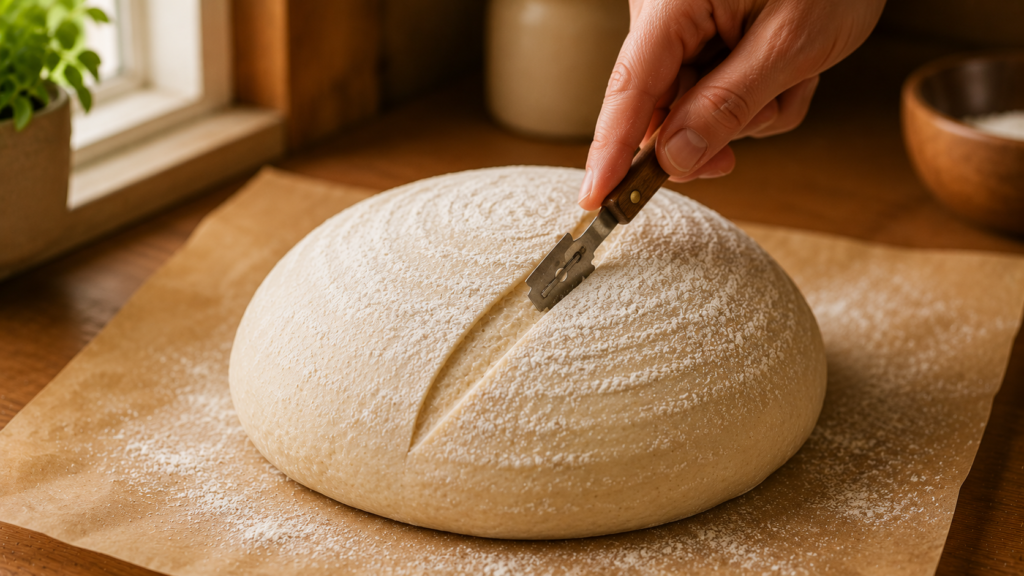
Preheat the oven to 475°F with the Dutch oven inside. Turn the cold dough out onto parchment paper, score the top with a sharp lame, then carefully lower it into the hot Dutch oven. Bake covered for 25 minutes, then remove the lid and bake another 18 to 20 minutes, until deep golden brown.
Cool Completely
Transfer the loaf to a wire rack and let it cool for at least 1 hour before slicing, this rest allows the crumb to fully set.
Pro Tips for Best Results
- Make sure the starter is active and bubbly before baking, it should roughly double within a few hours of feeding.
- Do not skip the stretch and fold sessions, they build the gluten structure that gives sourdough its open crumb.
- Keep the dough covered during bulk fermentation to prevent a dry skin from forming on top.
- Score the dough with one confident, decisive motion for the cleanest ear on the crust.
- Let the loaf cool fully before slicing, cutting too soon can make the crumb seem gummy even when it is fully baked.
Common Mistakes to Avoid
- Using an underactive starter: the loaf will rise poorly, always confirm the starter has doubled and looks bubbly before baking.
- Skipping the stretch and folds: this leads to a dense, tight crumb, always build structure through the folding sessions.
- Baking without preheating the Dutch oven: this weakens the initial oven spring, always heat the pot fully before adding the dough.
- Slicing too soon: the crumb can seem underbaked if cut while still warm, always let the loaf cool for at least an hour.
What to Serve With
- Good olive oil and balsamic vinegar, a simple pairing that lets the tangy crust shine.
- A warm bowl of soup, since thick slices are perfect for dipping.
- Soft cheese and honey, offering a sweet and savory contrast to the tang.

Storage and Reheating
- Counter: store cut side down on a wooden board for up to 3 days.
- Freezer: freeze sliced or whole, wrapped tightly, for up to 3 months.
- Reheating: warm slices in a 350°F oven for 5 to 8 minutes to re-crisp the crust, and avoid the microwave since it makes the crust chewy.
Nutrition Information
| Nutrient | Per Serving |
|---|---|
| Calories | 150 kcal |
| Total Fat | 1g |
| Saturated Fat | 0g |
| Carbohydrates | 31g |
| Protein | 5g |
| Sodium | 330mg |
| Fiber | 1g |
| Nutrition values are estimates and may vary based on specific ingredients and portion sizes used. | |
Health Benefits
The long fermentation process in sourdough breaks down some of the gluten and phytic acid naturally present in flour, which many people find easier to digest than bread made with commercial yeast. Sourdough also tends to have a lower glycemic impact than standard white bread thanks to the organic acids produced during fermentation.
Making this loaf at home also means avoiding the preservatives and dough conditioners found in most store-bought sourdough, while still getting that same tangy flavor and crackly crust.
Conclusion
There is nothing quite like the sound of a sourdough crust crackling as it cools, a small reminder that the starter did exactly what it was supposed to do. Give this one a try, save the recipe, and share it with anyone who has ever wanted to bake real sourdough at home.