Glazed Apple Fritter Bread with a Cinnamon Sugar Swirl
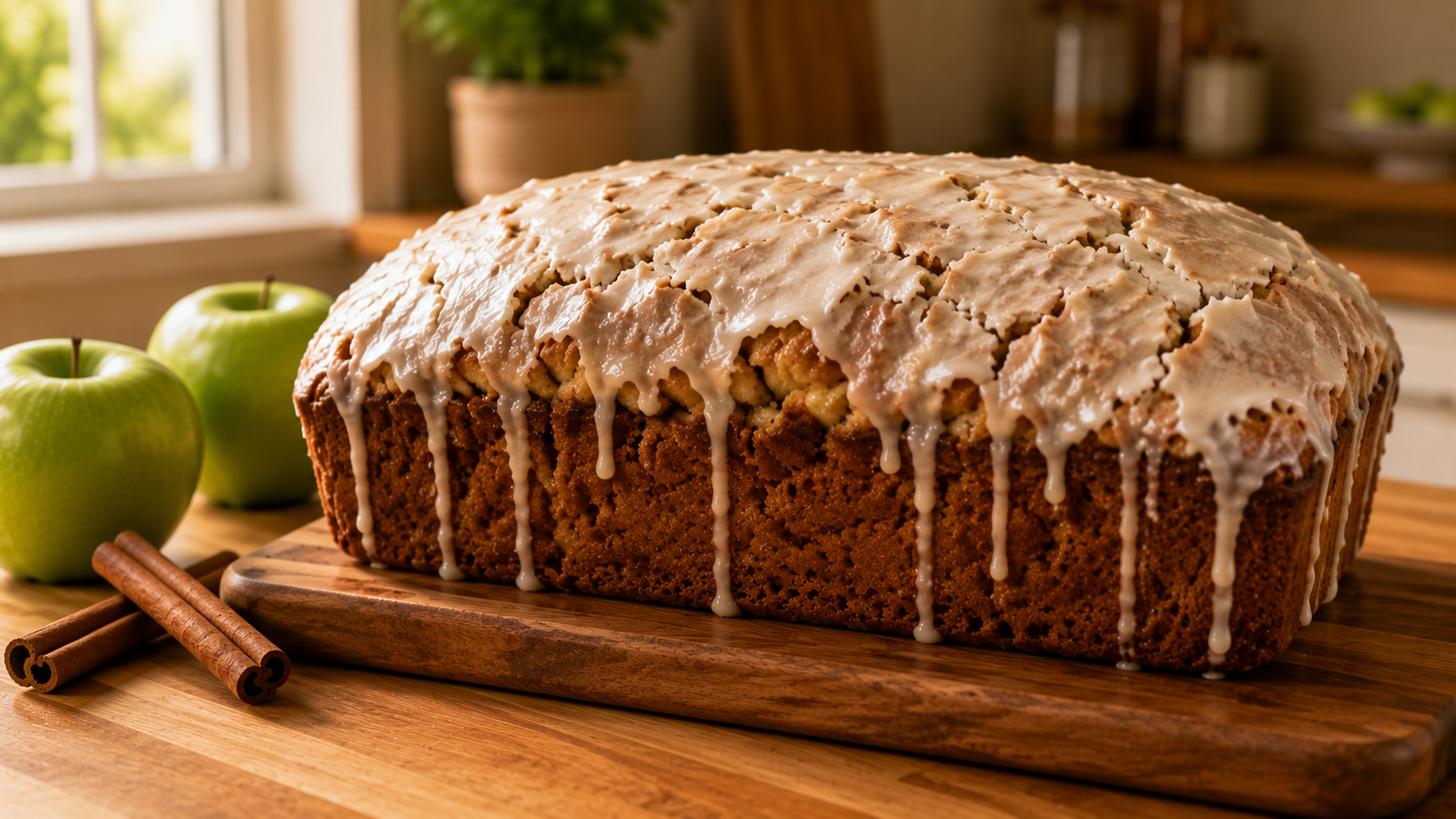
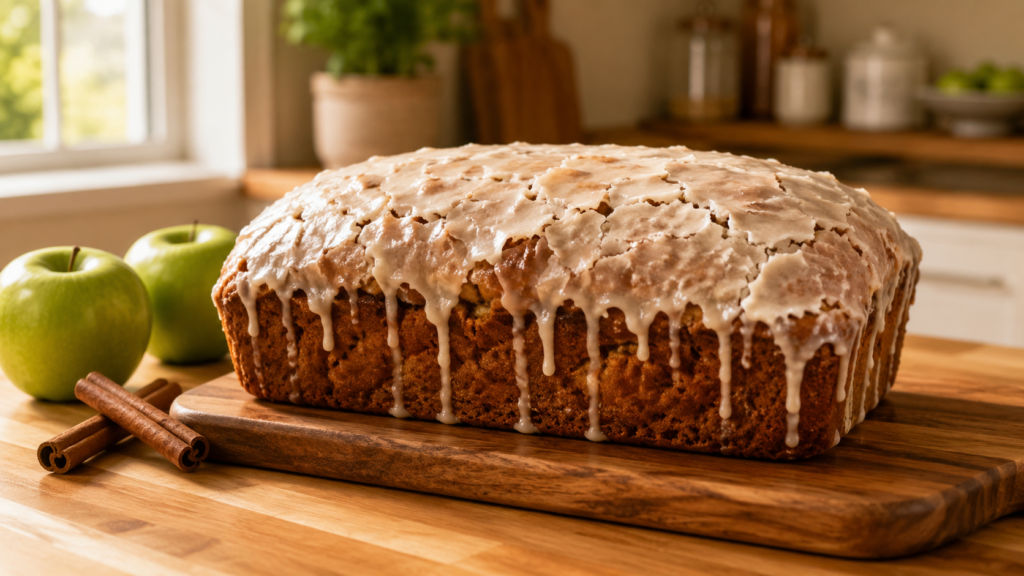
Apple fritter bread borrows everything that makes a fritter worth eating — the cinnamon-coated apple pieces, the vanilla glaze, the contrast between tender crumb and sugared crust — and moves it into a loaf pan where it slices cleanly and keeps for days.
The difference from a regular apple bread is the diced apple layered through the batter rather than grated in, giving each slice visible, jammy apple pieces inside every bite.
Why You Will Love This Recipe
- Diced cinnamon-coated apples folded through the batter in distinct layers create visible fruit pieces in every slice, exactly like a classic apple fritter pulled apart.
- A brown sugar cinnamon swirl runs through the center and caramelizes slightly at the edges during baking, giving the interior a fudgy ribbon of warm spice.
- The vanilla powdered sugar glaze poured over the warm loaf soaks into the top crust and sets into a crackled, sweet shell that makes the bread look and taste bakery-worthy.
- No mixer, no yeast, no rising time — the batter comes together in two bowls and goes straight into the oven.
- The loaf is genuinely better on day two, when the glaze has fully set and the cinnamon apple filling has had time to settle into the crumb.
Ingredients
For the cinnamon apple filling:
- 2 medium apples, peeled and diced into 1/2 inch pieces (Granny Smith or Honeycrisp work best)
- 2 tablespoons granulated sugar
- 1 teaspoon ground cinnamon
For the bread batter:
- 2 cups all-purpose flour
- 1 and 1/2 teaspoons baking powder
- 1/2 teaspoon baking soda
- 1 teaspoon ground cinnamon
- 1/4 teaspoon ground nutmeg
- 1/2 teaspoon fine salt
- 2 large eggs, at room temperature
- 1/2 cup granulated sugar
- 1/4 cup light brown sugar, packed
- 1/2 cup sour cream, at room temperature
- 1/3 cup neutral oil
- 1 teaspoon pure vanilla extract
- 1/4 cup whole milk
For the cinnamon swirl:
- 3 tablespoons light brown sugar, packed
- 1 teaspoon ground cinnamon
For the vanilla glaze:
- 1 cup powdered sugar, sifted
- 2 to 3 tablespoons whole milk
- 1/2 teaspoon pure vanilla extract
- 1 pinch fine salt
Sour cream in the batter is not a substitution here — it is a deliberate choice. Its acidity reacts with the baking soda to lift the crumb while its fat content keeps the loaf tender around the apple pieces, which release moisture as they bake and can otherwise make the crumb gummy.

Crockery and Time To Create
You will need one standard 9 by 5 inch loaf pan, two mixing bowls, a small bowl for the swirl, and a wire rack set over a baking sheet for glazing. Total time is 1 hour 20 minutes including baking and a short glaze set time. The recipe makes one loaf serving 10 to 12 slices.
Ingredient Substitutions and Variations
- Greek yogurt: replaces sour cream at a one to one ratio and produces a nearly identical crumb with a very slightly tangier flavor.
- Coconut oil: replaces neutral oil and adds a subtle warmth that works well alongside the apple and cinnamon without being detectable as coconut.
- Brown butter: replaces neutral oil at the same volume and adds a deep nutty, toasted note that makes the bread taste significantly more complex with very little extra effort — melt and cook the butter until golden and nutty, then cool before using.
- Maple extract: replaces half the vanilla extract in the glaze for a warm maple-glazed fritter quality that is genuinely excellent.
- Cardamom: adds 1/4 teaspoon to the cinnamon swirl mixture for a slightly floral, exotic spice note alongside the cinnamon.
Step-by-Step Instructions
- Preheat your oven to 350 degrees Fahrenheit. Grease a 9 by 5 inch loaf pan and line it with parchment paper, leaving overhang on the long sides for easy lifting after baking.
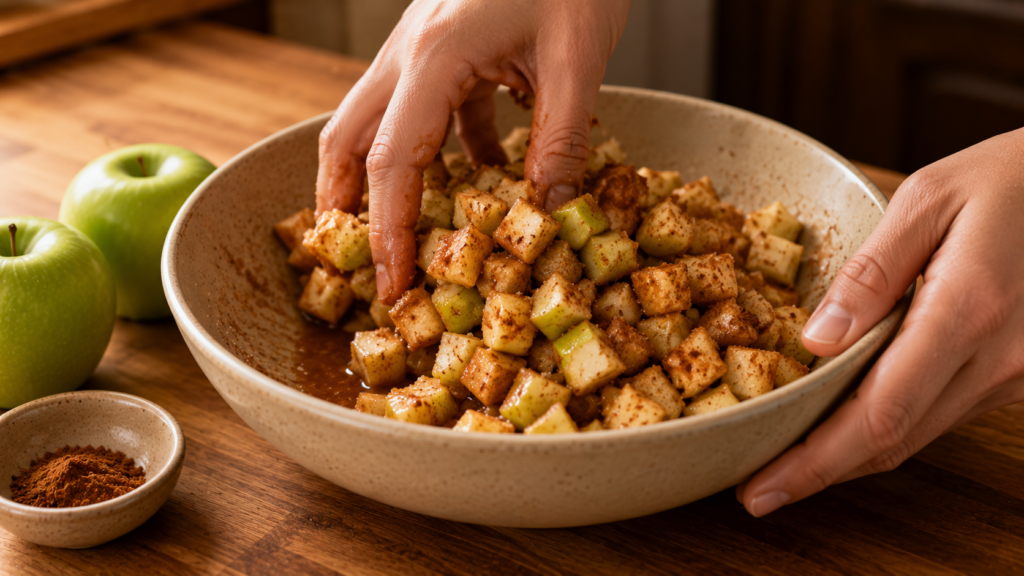
- In a small bowl toss the diced apple pieces with the granulated sugar and cinnamon until every piece is coated. Set aside to macerate for 5 minutes while you prepare the batter. The apples will release a little juice and become glossy, which is exactly right.
- In a large bowl whisk together the flour, baking powder, baking soda, cinnamon, nutmeg, and salt. In a separate bowl whisk the eggs, granulated sugar, brown sugar, sour cream, oil, vanilla extract, and milk together until smooth and fully combined.
- Pour the wet ingredients into the dry and fold gently until just combined with a few streaks of flour still visible. Do not overmix.
- In a small bowl stir together the brown sugar and cinnamon for the swirl until combined.
- Pour roughly one third of the batter into the prepared loaf pan and smooth it level. Scatter half of the cinnamon apple pieces evenly over this layer. Sprinkle half the cinnamon swirl mixture over the apples. Pour another third of the batter over this, smooth it gently, then add the remaining apple pieces and the remaining cinnamon swirl. Pour the final third of the batter over the top and smooth it to the edges, covering the filling completely. Do not stir or swirl the layers together.
- Bake for 55 to 65 minutes until a toothpick inserted into the center comes out with moist crumbs but no wet batter. The top should be deep golden brown. If the top is darkening too quickly after the 40-minute mark, tent loosely with foil for the remaining bake time.
- Cool in the pan for 15 minutes, then lift out onto a wire rack set over a baking sheet or a sheet of parchment to catch drips.
- Make the vanilla glaze. Sift the powdered sugar into a bowl, add the vanilla extract and pinch of salt, then whisk in the milk one tablespoon at a time until the glaze is thick enough to coat the back of a spoon but thin enough to pour. It should fall in a slow, steady ribbon from the whisk.
- Pour the glaze over the warm loaf in a generous even stream, letting it run down the sides naturally. Allow the glaze to set for 15 minutes before slicing. It will go from wet and glossy to a crackled matte finish as it sets.

Pro Tips for Best Results
- Toss and macerate the apple pieces before layering them into the batter, because pre-coated apple releases less juice directly into the batter during baking and the pieces stay defined rather than dissolving.
- Use cold sour cream straight from the fridge in this recipe — unlike butter-based batters, cold dairy in an oil-based quick bread batter does not affect the rise and keeps the mixing bowl from getting too warm.
- Layer the batter and apple filling in three distinct stages rather than stirring everything together, because the layering is what creates the visible apple pieces and swirl definition in each slice.
- Glaze the loaf while it is still warm but not hot — a fully hot loaf will absorb the glaze too quickly and none will remain on the surface. Fifteen minutes of cooling is the ideal window.
- Wait the full 15 minutes after glazing before slicing or the glaze will smear across the cut face rather than cracking cleanly at the knife.
Common Mistakes to Avoid
- Skipping the apple maceration step: uncoated raw apple pieces release a large volume of juice directly into the surrounding batter as they bake, creating wet pockets in the crumb. The sugar coating draws out some of this moisture before baking so it distributes more evenly.
- Overmixing the batter: this develops the gluten in the flour and produces a dense, tough loaf rather than a tender, open crumb. Fold until the flour just disappears and stop there.
- Swirling the layers together after adding the filling: this collapses the distinct apple and swirl layers into a muddy uniform interior. Layer and leave it alone.
- Glazing a completely cold loaf: the glaze sits on the surface rather than bonding to the crust and peels off when sliced. Always glaze while there is still residual warmth in the loaf.
What to Serve With
- Vanilla bean ice cream: a scoop alongside a warm slice turns the bread into a proper dessert and the glaze melts into the ice cream in the best possible way.
- Strong brewed coffee: the bitterness of black coffee against the sweet vanilla glaze and cinnamon apple filling is the most natural pairing this bread has, and the one I always reach for first.
- Whipped cream cheese: spreading a thin layer of lightly sweetened whipped cream cheese on a cold slice the next morning makes this bread genuinely rival any bakery case item for breakfast.

Storage and Reheating
- Room temperature: cover loosely with cling film or store in an airtight container for up to 3 days. The glaze softens slightly after the first day but the flavor deepens noticeably.
- Fridge: refrigerate for up to 5 days. The glaze firms up considerably in the cold. Bring slices to room temperature before eating for the best texture.
- Freezer: freeze individual slices wrapped tightly for up to 2 months. The glaze may weep slightly on thawing but the flavor is unaffected.
- Reheating: warm individual slices in a 325 degree Fahrenheit oven for 6 to 8 minutes. The glaze will soften and re-gloss beautifully with gentle heat.
Nutrition Information
| Nutrient | Per Serving (1 slice) |
|---|---|
| Calories | 312 kcal |
| Carbohydrates | 48 g |
| Protein | 4 g |
| Fat | 12 g |
| Saturated Fat | 2.5 g |
| Cholesterol | 36 mg |
| Sodium | 188 mg |
| Fiber | 1 g |
| Sugar | 28 g |
| Nutrition values are estimates only and will vary based on specific ingredients and portion sizes used. | |
Health Benefits
Apples contribute dietary fiber, vitamin C, and quercetin to each slice, and because the fruit is diced and layered rather than cooked down into a puree, more of the cellular structure survives the bake, preserving a greater proportion of those nutrients. Two medium apples across a twelve-slice loaf means a genuine fruit contribution per serving rather than a token amount.
Sour cream in the batter adds calcium and a small amount of probiotics, and its fat content means the loaf requires less total oil than recipes using milk or buttermilk alone, keeping the overall fat profile more moderate than most glazed quick breads. For a treat, it sits on the more considered end of the spectrum.
Conclusion
Apple fritter bread gives you everything the doughnut shop version promises but in a format that feeds a crowd, travels well, and tastes even better the next morning. The glaze is not optional, the layering is not optional, and the day-two slice is absolutely worth waiting for. Save the recipe, bake it this weekend, and share it before it disappears.