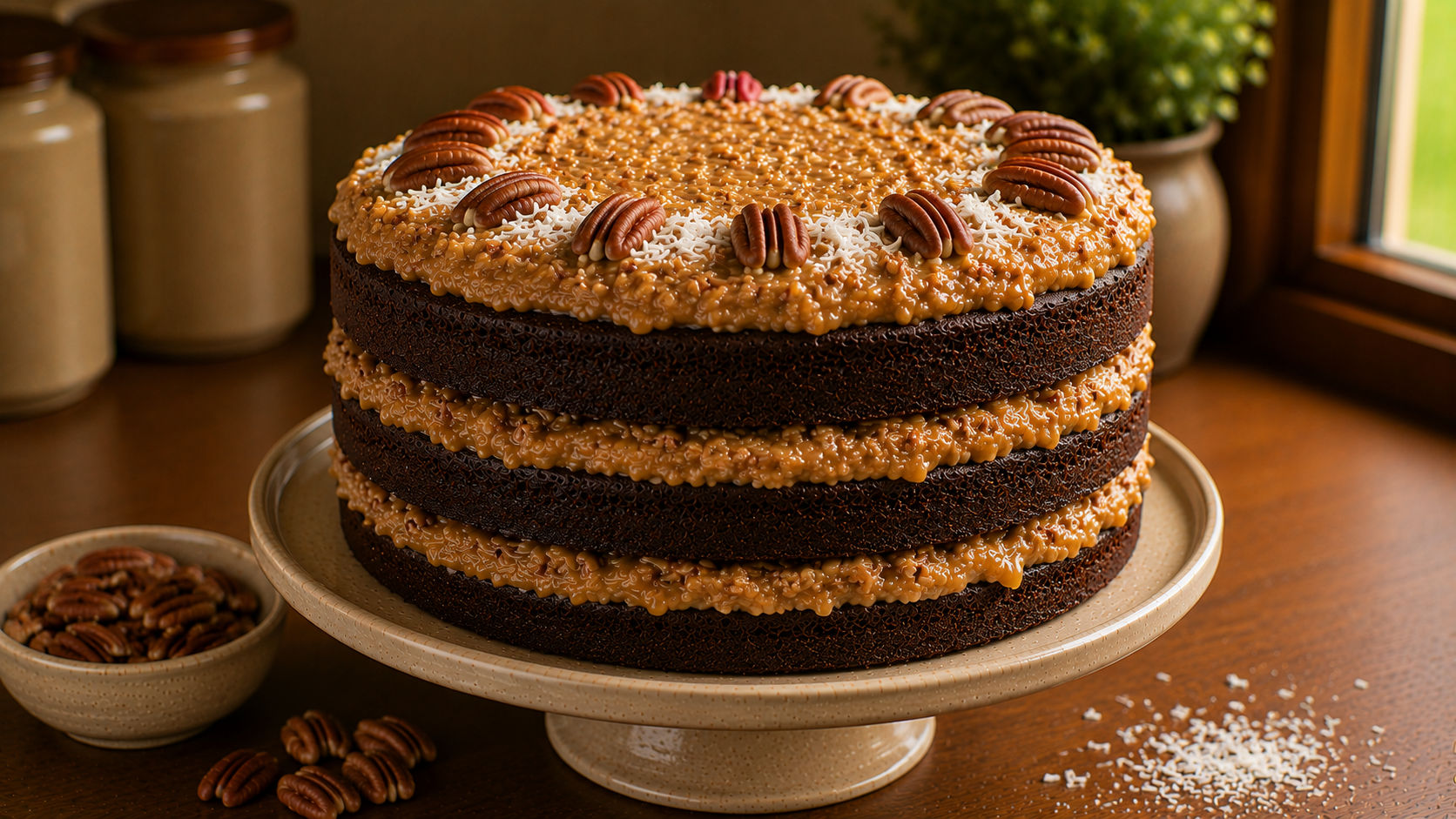
Decadent German Chocolate Cake with Coconut Pecan Frosting
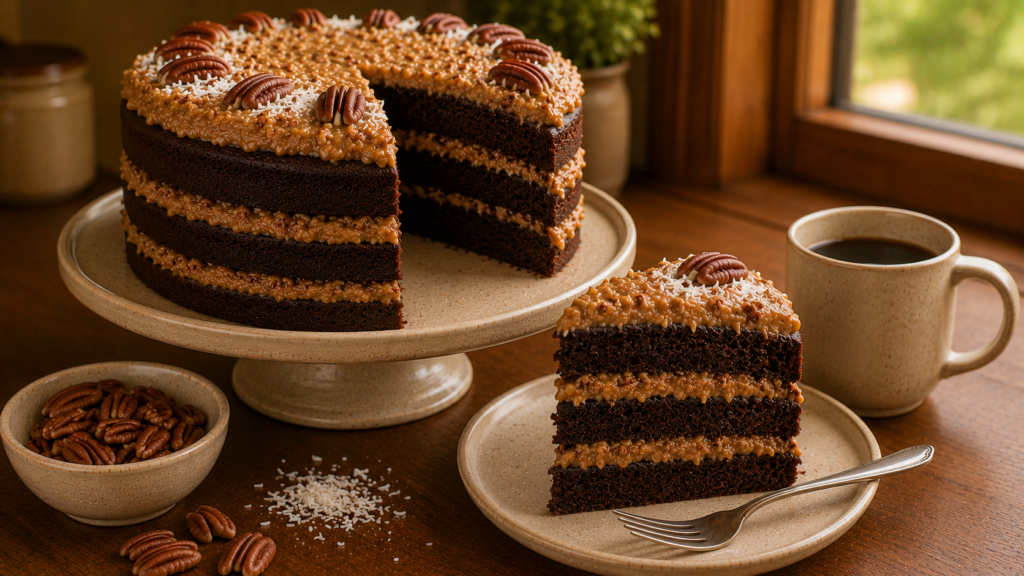
My grandmother used to say that if you are going to make a chocolate cake, make one worth remembering. German chocolate cake is exactly that. Rich cocoa layers lifted with whipped egg whites, stacked under a thick, sticky coconut pecan frosting cooked low and slow on the stovetop. This is the cake I pull out when the occasion actually means something.
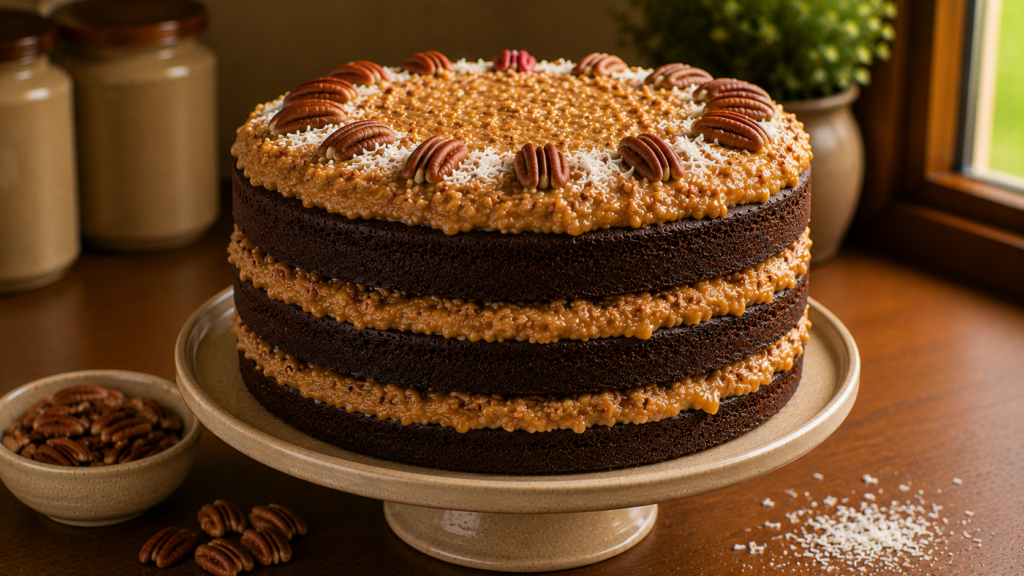
Why You Will Love This Recipe
- The chocolate layers are built on Baker’s German Sweet Chocolate and real buttermilk, giving the crumb a silkier, more complex flavor than cocoa powder alone ever could.
- That coconut pecan frosting is cooked from egg yolks, evaporated milk, and butter into a thick, caramel-toned filling with chewy coconut and the satisfying crunch of toasted pecans in every bite.
- Folding stiff egg whites into the batter gives these layers a texture that is simultaneously rich and airy, which is what separates a true German chocolate cake from an ordinary chocolate layer cake.
- Despite looking like a showstopping bakery creation, this cake is genuinely approachable for home bakers with clear steps and a one-saucepan frosting.
- The flavor combination of chocolate, coconut, and toasted pecan is timeless and deeply satisfying for any occasion from Sunday dinner to a milestone birthday.
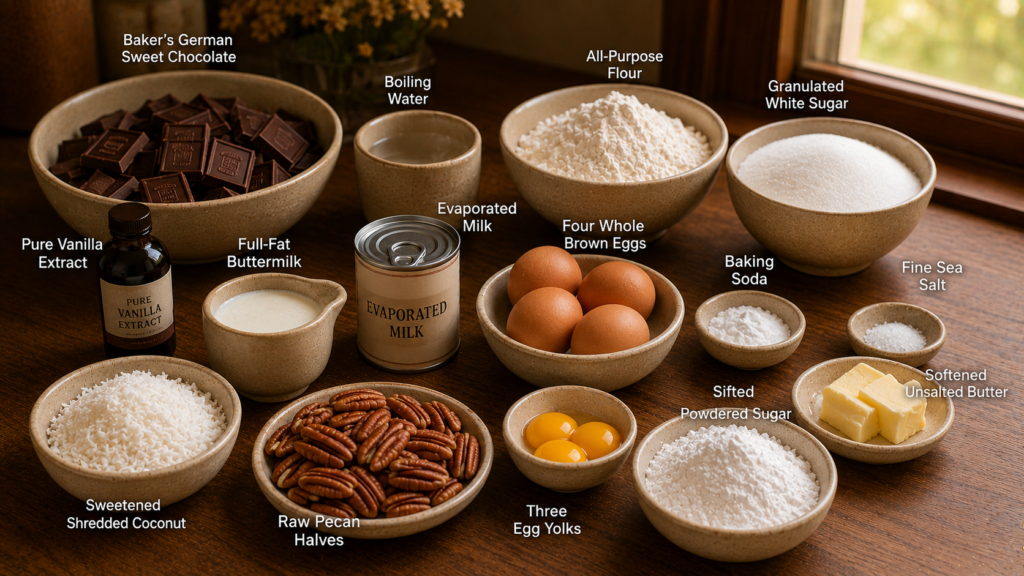
Ingredients
For the Chocolate Cake Layers:
- 4 ounces (113g) Baker’s German Sweet Chocolate Bar, coarsely chopped
- 1/2 cup (120ml) boiling water
- 2 and 1/4 cups (285g) all-purpose flour, spooned and leveled
- 1 teaspoon baking soda
- 1/2 teaspoon fine sea salt
- 1 cup (226g) unsalted butter, softened to room temperature
- 2 cups (400g) granulated white sugar
- 4 large eggs, separated, room temperature
- 2 teaspoons pure vanilla extract
- 1 cup (240ml) full-fat buttermilk, room temperature
For the Coconut Pecan Frosting:
- 1 cup (240ml) evaporated milk
- 1 cup (200g) granulated white sugar
- 3 large egg yolks
- 1/2 cup (113g) unsalted butter, cut into pieces
- 1 teaspoon pure vanilla extract
- 1 and 1/3 cups (115g) sweetened shredded coconut
- 1 cup (120g) pecans, toasted and roughly chopped
For the Chocolate Buttercream (optional, for the sides):
- 1/2 cup (113g) unsalted butter, softened
- 1 and 1/2 cups (180g) powdered sugar, sifted
- 1/3 cup (30g) unsweetened natural cocoa powder
- 3 tablespoons heavy cream
- 1/2 teaspoon pure vanilla extract
Crockery and Time To Create
- Three 9-inch round cake pans
- Stand mixer or electric hand mixer
- Medium heavy-bottomed saucepan
- Large mixing bowls, rubber spatula, and wooden spoon
- Wire cooling rack and offset spatula
- Parchment paper
Prep Time: 35 minutes Bake Time: 30 to 35 minutes Cooling and Frosting Time: 1 hour 30 minutes Total Time: approximately 2 hours 40 minutes Servings: 12 slices
Ingredient Substitutions and Variations
- Baker’s German Sweet Chocolate substitute: Combine 3 ounces of semi-sweet chocolate with 1 tablespoon of granulated sugar to replicate the specific sweetness and cacao balance the authentic bar brings.
- No buttermilk: Stir 1 tablespoon of white vinegar into 1 cup of whole milk and let it sit for 5 minutes until slightly thickened for a substitute that keeps the layers just as tender.
- Nut-free version: Leave the pecans out entirely and the frosting still sets beautifully, with the coconut texture carrying it perfectly, or swap in walnuts if that is what you have on hand.
- Dairy-free adaptation: Use vegan butter throughout, swap evaporated milk in the frosting for full-fat coconut milk, and replace buttermilk with plant-based milk and vinegar. The coconut milk actually deepens the frosting flavor.
- More intense chocolate: Use dark bittersweet chocolate in place of the sweet German bar and reduce the cake batter sugar by about 2 tablespoons to stay balanced.
Step-by-Step Instructions
Step 1: Prep Your Pans and Preheat (5 minutes)
Preheat your oven to 350 degrees Fahrenheit (177 degrees Celsius). Grease three 9-inch round cake pans generously with butter, line the bottoms with parchment paper circles, then grease the parchment too. Dust each pan lightly with flour and tap out any excess. This three-layer setup is traditional for German chocolate cake and gives you the ideal frosting-to-cake ratio in every slice.
Step 2: Melt the German Sweet Chocolate (5 minutes)
Place the chopped chocolate in a heatproof bowl and pour the boiling water directly over it. Let it sit undisturbed for one minute, then stir gently until completely smooth and glossy. Set it aside to cool to room temperature. Do not rush this step. Adding hot chocolate to creamed butter will melt it and collapse all the air you worked to build.
Step 3: Whisk the Dry Ingredients (3 minutes)
In a medium bowl, whisk together the flour, baking soda, and fine sea salt until evenly combined. Whisking aerates the flour and ensures the leavening is distributed throughout, giving you an even rise across all three layers. Set the bowl aside.
Step 4: Separate the Eggs (3 minutes)
Carefully separate your four eggs, placing the yolks in one small bowl and the whites in a clean, completely grease-free mixing bowl. Any trace of fat in that bowl will prevent the whites from whipping properly. Let both bowls sit at room temperature while you cream the butter and sugar.
Step 5: Cream Butter and Sugar (5 minutes)
In the bowl of your stand mixer fitted with the paddle attachment, beat the softened butter on medium-high for about 2 minutes until very light and creamy. Add the sugar and continue beating for 3 more minutes until the mixture is pale, fluffy, and noticeably increased in volume. Add the egg yolks one at a time, beating well after each, then mix in the vanilla and cooled melted chocolate until fully incorporated.
Step 6: Alternate Dry Ingredients and Buttermilk (5 minutes)
With the mixer on low, add the flour mixture in three portions alternating with the buttermilk in two portions, beginning and ending with flour. Mix only until each addition just disappears before adding the next. Scrape down the sides and bottom of the bowl between additions. Overmixing here develops the gluten and produces a dense cake, so keep it minimal and deliberate.
Step 7: Whip and Fold in the Egg Whites (5 minutes)
Using clean beaters on medium-high, whip the reserved egg whites until they form stiff, glossy peaks that hold their shape when the beaters are lifted. Gently fold them into the chocolate batter in two additions using a large rubber spatula, with wide sweeping motions from the bottom of the bowl upward. This step creates that characteristic crumb that is rich and airy at the same time. Be gentle and take your time.

Step 8: Bake the Cake Layers (30 to 35 minutes)
Divide the batter evenly among the three prepared pans. For perfectly even layers, weigh the batter and split it equally. Give each pan a gentle tap on the counter to release any large surface bubbles. Bake on the center rack for 30 to 35 minutes until a toothpick inserted in the center comes out clean or with just a dry crumb. The tops will look set and spring back lightly when touched.
Step 9: Cool the Layers Completely (1 hour)
Cool the cakes in their pans on wire racks for 15 minutes, then invert onto the racks and peel away the parchment. Allow the layers to cool completely to room temperature before frosting, about 1 hour. Warm layers will cause the coconut pecan frosting to slide and thin out rather than sitting thick and luscious on top.
Step 10: Make the Coconut Pecan Frosting (15 minutes)
In a medium heavy-bottomed saucepan, combine the evaporated milk, sugar, egg yolks, and butter pieces over medium heat. Stir constantly with a wooden spoon. After 10 to 12 minutes, the frosting will thicken enough to coat the back of a spoon and leave a clear trail when you run your finger through it. Remove from heat and stir in the vanilla, shredded coconut, and toasted pecans. Cool at room temperature for 30 to 45 minutes, stirring occasionally, until it reaches a thick, spreadable consistency.
Step 11: Assemble the Cake (15 minutes)
Place the first cooled cake layer on your serving plate. Spread about one third of the coconut pecan frosting evenly across the top all the way to the edges. Set the second layer on top and repeat with another third. Add the final layer and spread the remaining frosting across the top. If using the optional chocolate buttercream, apply it to the sides with an offset spatula. Finish with a few toasted pecan halves and a gentle sprinkle of shredded coconut pressed around the top edge.

Pro Tips for Best Results
- Toast your pecans on a dry baking sheet at 350 degrees Fahrenheit for 7 to 8 minutes before adding them to the frosting for a deeper, nuttier flavor and more satisfying crunch.
- Never skip the egg white whipping step. It is what gives German chocolate cake its characteristic crumb that no other mixing method can replicate.
- Let the coconut pecan frosting cool and thicken fully before assembling or it will seep into the layers and slide off the sides instead of sitting in thick mounds on top.
- Use real German sweet chocolate rather than a substitution if you can source it, since the specific sugar content and cocoa butter ratio of the authentic bar shapes the entire flavor of this cake.
- Bake all three layers on the same oven rack at the same time if your oven allows it, so you get identical texture and rise across all layers and assembly becomes much easier.
Common Mistakes to Avoid
- Adding hot melted chocolate directly to the butter: This melts the butter and causes the batter to separate into a greasy mess. Always let the chocolate mixture cool until barely warm before mixing it in.
- Stirring the frosting over high heat: High heat scrambles the egg yolks before they can thicken smoothly. Keep the heat at medium, stir constantly, and be patient.
- Frosting layers that are even slightly warm: This is the most common reason German chocolate cake falls apart during assembly. The frosting needs a cool, firm surface to grip onto and stay put.
- Swapping in unsweetened or bittersweet chocolate: The original recipe was built around that milder, sweeter German chocolate bar and all ingredient quantities reflect that balance specifically.
What to Serve With
- Strong black coffee or smooth espresso: The bitterness cuts through the richness of the coconut pecan frosting and sweet chocolate layers, creating a balance that makes each bite feel even more indulgent.
- Vanilla bean ice cream: Cold, creamy ice cream melting into the warm, sticky frosting creates a temperature and texture contrast that guests talk about long after the gathering ends.
- Slow-roasted beef brisket or classic pot roast: The savory richness of a hearty main course prepares the palate beautifully for the deeply satisfying sweetness of this cake at a dinner party or holiday table.
Storage and Reheating
- At room temperature: Store covered loosely with plastic wrap for up to 2 days, then move to the refrigerator since the frosting contains egg yolks and butter.
- In the refrigerator: Keeps well for up to 5 days covered. Bring refrigerated slices to room temperature for at least 20 minutes before eating so the frosting softens and the layers return to their tender texture.
- Freezer: Wrap individual unfrosted cake layers tightly in plastic wrap and then aluminum foil for up to 3 months. The coconut pecan frosting can be frozen separately in an airtight container for up to 2 months. Thaw overnight in the refrigerator and stir well before using.
- Reheating: This cake is best enjoyed at room temperature, not warmed. Remove from the refrigerator 20 to 30 minutes before serving for the best flavor and frosting consistency.
Nutrition Information
| Nutrient | Per Serving |
|---|---|
| Calories | 720 kcal |
| Total Fat | 42g |
| Saturated Fat | 22g |
| Cholesterol | 185mg |
| Sodium | 290mg |
| Total Carbohydrates | 81g |
| Sugars | 60g |
| Protein | 8g |
| Fiber | 3g |
| Nutritional values are estimates based on 12 servings. Actual values may vary depending on specific ingredients and portion sizes used. | |
Health Benefits
German chocolate cake is a rich, celebratory dessert best enjoyed as an occasional treat. That said, the cocoa in this recipe provides flavanols, plant-based compounds associated with heart health and improved circulation, and pecans are among the most antioxidant-rich tree nuts available, offering healthy monounsaturated fats, magnesium, and zinc.
Coconut contributes medium-chain triglycerides, a fat the body metabolizes differently from long-chain fats, and eggs bring high-quality protein, choline for brain function, and vitamins A, D, and B12. None of that makes this a health food, but the ingredients that make it special are not without real nutritional value.
Conclusion
German chocolate cake takes patience, care, and a genuine respect for the process. But what comes out of that effort is something that belongs in a completely different category from the average layer cake. The contrast between those soft, lightly sweet chocolate layers and the thick, caramel-toned coconut pecan frosting is unlike anything else in the dessert world. Make it for the people who matter to you, save this recipe for the occasions that deserve something extraordinary, and share it with anyone who still believes a homemade cake is the highest form of celebration.
Decadent German Chocolate Cake with Coconut Pecan Frosting
Ingredients
Method
Notes
- Use Baker’s German Sweet Chocolate bar for authentic flavor, not bittersweet or semi-sweet.
- Fold whipped egg whites gently to preserve the airy crumb.
- Cool frosting fully to room temperature before assembling.
- Toast pecans before adding to the frosting for deeper flavor.
- Bring refrigerated cake to room temperature before serving.