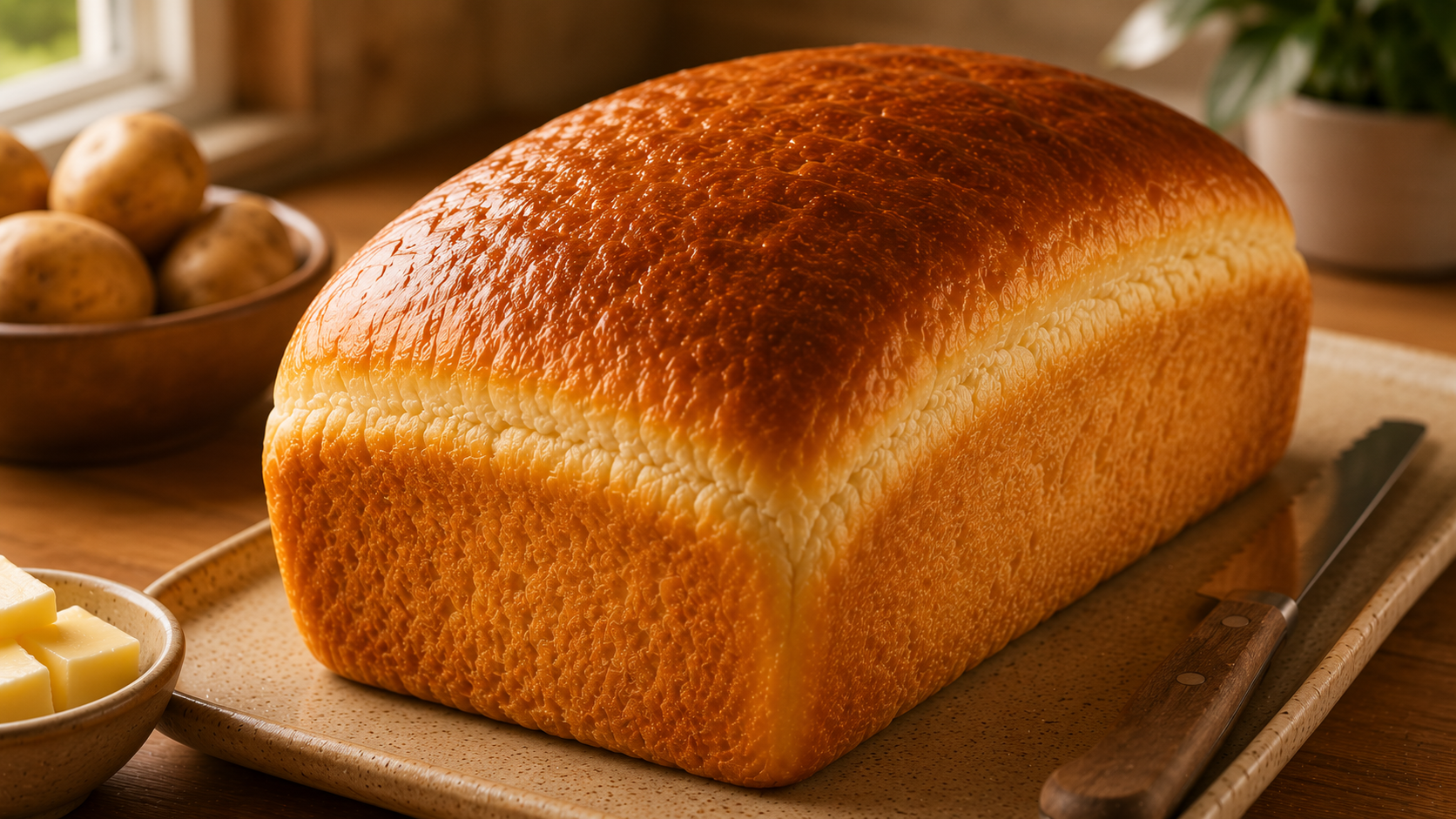
Soft Pillowy Potato Bread with a Golden Buttery Crust
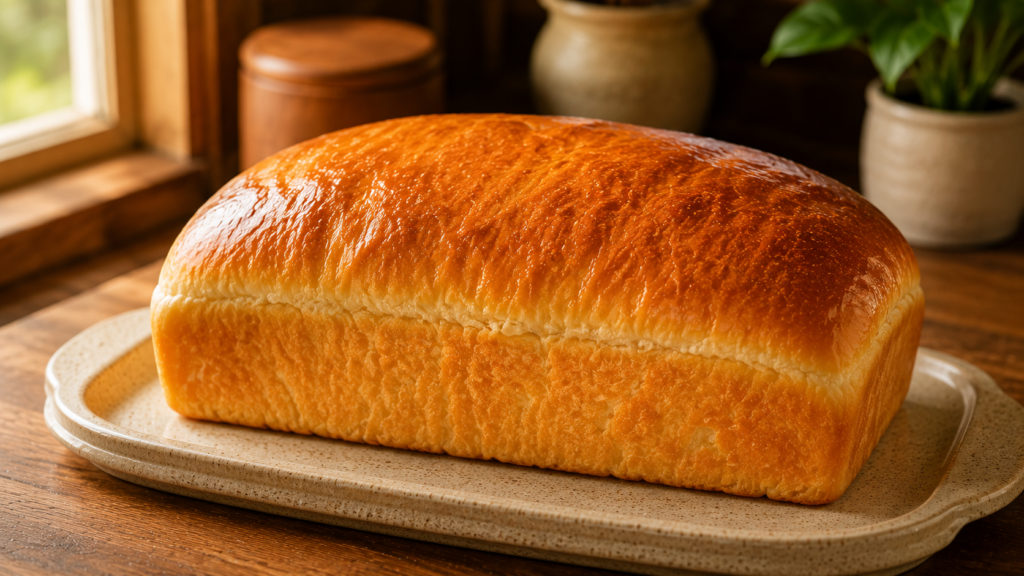
Mashed potato in bread dough does something flour alone never manages, it holds onto moisture for days without turning gummy or dense. The result is a loaf that stays soft well past baking day, with a tender crumb that pulls apart in long, even strands.
Why You Will Love This Recipe
- Mashed potato keeps the crumb soft and moist for days.
- A tender, slightly sweet flavor that works for both savory and sweet toppings.
- No special equipment needed, just a bowl and a loaf pan.
- Makes excellent toast, sandwiches, or dinner rolls.
- Freezes well, so a batch lasts far beyond the first few days.
Ingredients
- 1 cup mashed potato, cooled to room temperature, about 1 medium potato
- 3 3/4 cups all-purpose flour
- 2 1/4 teaspoons active dry yeast, about 1 packet
- 1/4 cup granulated sugar
- 1 1/2 teaspoons fine salt
- 3/4 cup warm milk, about 110°F
- 1/4 cup unsalted butter, melted, plus extra for brushing
- 1 large egg

Crockery and Time To Create
You will need a large mixing bowl, a small pot for boiling the potato, a 9×5 inch loaf pan, and a pastry brush. Prep time is 25 minutes and cook time is 35 minutes, for a total active time of 60 minutes. The dough also needs about 1 hour 30 minutes to rise across two rises, which is not included in the active time. This recipe makes one loaf and serves 12.
Ingredient Substitutions and Variations
- Mashed potato: swap for mashed sweet potato for a slightly sweeter, more colorful loaf.
- Whole milk: swap for buttermilk for a softer crumb with a subtle tang.
- Unsalted butter: swap for melted ghee for a richer, nuttier flavor.
- All-purpose flour: swap for bread flour for a slightly chewier texture.
- Granulated sugar: swap for honey for a softer, more rounded sweetness.
Step-by-Step Instructions
Prepare the Potato
Peel and cube the potato, then boil in salted water until fork-tender, about 12 minutes. Drain well and mash until completely smooth, then let it cool to room temperature before using.
Activate the Yeast
In a large bowl, dissolve the yeast and sugar in the warm milk and let it sit for 5 to 10 minutes, until the surface turns foamy.
Mix the Dough
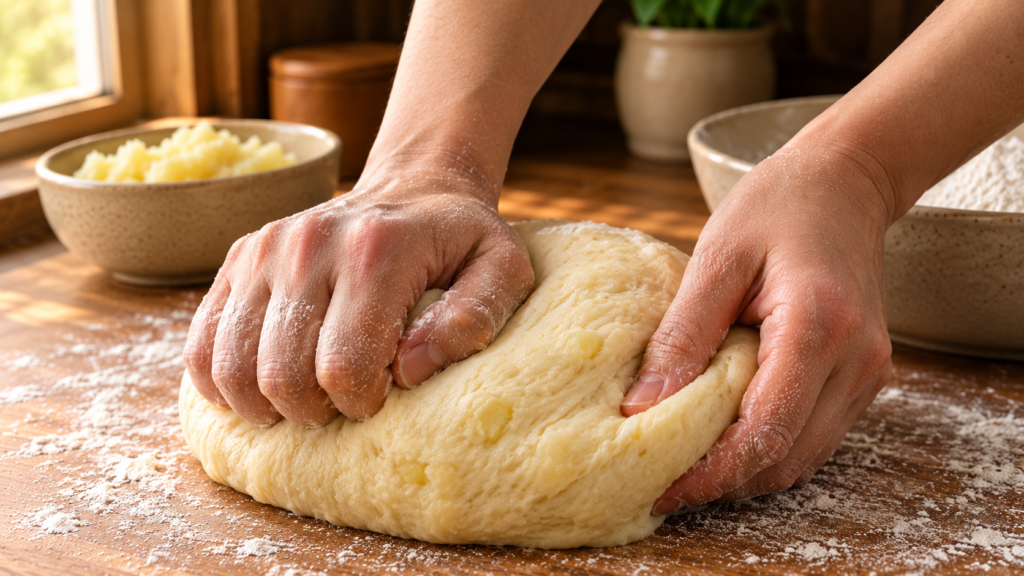
Add the mashed potato, melted butter, egg, salt, and flour to the yeast mixture, then knead by hand or with a dough hook for about 10 minutes, until the dough is smooth, soft, and slightly tacky.
First Rise
Cover the bowl and let the dough rise in a warm spot for about 1 hour, until it has doubled in size.
Shape the Loaf
Punch down the dough, shape it into a loaf, and place it seam side down in a greased 9×5 inch loaf pan.

Second Rise
Cover loosely and let the shaped loaf rise for 30 minutes, until it crests just above the rim of the pan.
Bake the Loaf
Bake at 350°F for 32 to 35 minutes, until the top is deep golden and the loaf sounds hollow when tapped.
Cool and Slice
Brush the hot loaf with melted butter, let it cool in the pan for 10 minutes, then transfer to a wire rack to cool completely before slicing.
Pro Tips for Best Results
- Let the mashed potato cool fully before mixing it into the dough, warm potato can affect how the yeast activates.
- Avoid adding extra flour beyond what the recipe calls for, the potato already makes the dough soft and slightly sticky by nature.
- Brush the loaf with butter right out of the oven for the softest, glossiest crust.
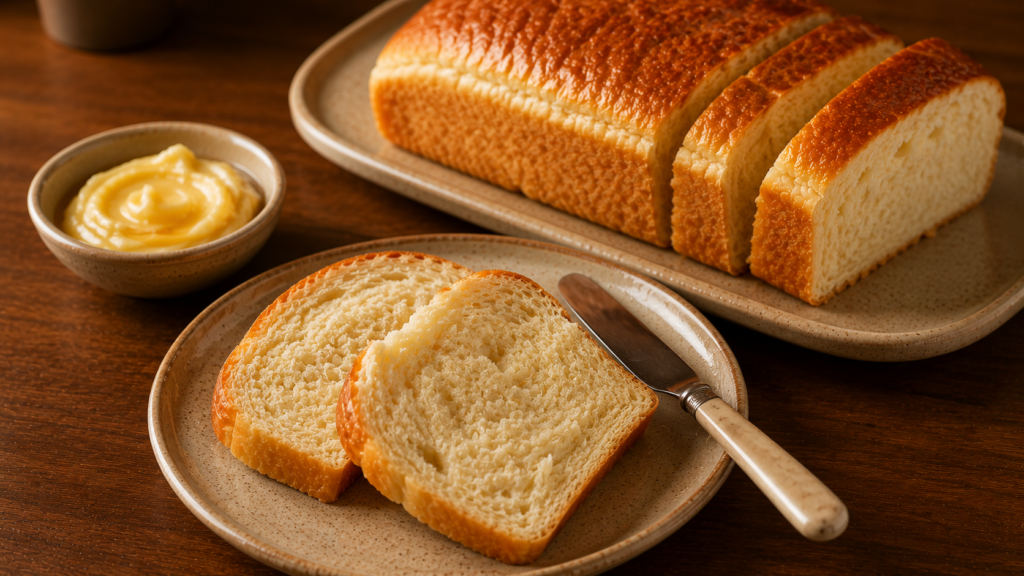
- Let the loaf cool most of the way before slicing so the crumb sets properly.
- Tap the bottom of the loaf to check doneness, a hollow sound means it is fully baked through.
Common Mistakes to Avoid
- Using warm mashed potato: it can overheat the yeast, always let it cool to room temperature first.
- Adding too much flour: this makes the loaf dense, stick close to the measured amount even if the dough feels soft.
- Skipping the second rise: the loaf can turn out flat and dense, always let it puff up in the pan before baking.
- Slicing too soon: the crumb can seem gummy if cut while still hot, let it cool most of the way first.
What to Serve With
- Softened honey butter, which melts beautifully into the warm, tender crumb.
- A bowl of soup or stew, since the soft slices are perfect for dipping.
- Scrambled eggs, since the mild sweetness pairs well with a savory breakfast plate.
Storage and Reheating
- Fridge: store wrapped tightly for up to 5 days.
- Freezer: freeze sliced or whole, wrapped tightly, for up to 3 months.
- Reheating: warm slices in a 300°F oven for 5 to 8 minutes, or toast directly from frozen for a quick warm slice.
Nutrition Information
| Nutrient | Per Serving |
|---|---|
| Calories | 190 kcal |
| Total Fat | 4g |
| Saturated Fat | 2g |
| Carbohydrates | 34g |
| Protein | 5g |
| Sodium | 190mg |
| Fiber | 1g |
| Nutrition values are estimates and may vary based on specific ingredients and portion sizes used. | |
Health Benefits
Potatoes contribute potassium and a modest amount of vitamin C, giving this loaf a small nutritional edge over a plain white bread. The egg and milk in the dough also add a bit of protein and calcium to every slice.
Making bread at home means avoiding the preservatives and excess sodium often found in packaged loaves, while still getting that same soft, tender texture people love in a potato bread.
Conclusion
There is a reason this loaf disappears faster than almost anything else I bake, the texture is simply softer than a standard bread and it stays that way for days. Give this one a try, save the recipe, and share it with anyone who has never had real homemade potato bread.