Chewy French Toast Cookies with Maple Vanilla Glaze
French toast has three flavor signatures that make it instantly recognizable: the custardy richness of egg-soaked bread, the warm depth of cinnamon sugar in browned butter, and the sweetness of maple syrup poured over the top. Translating all three into a cookie dough rather than just adding cinnamon to a standard butter cookie is what makes these French toast cookies actually taste like the thing they are named after.
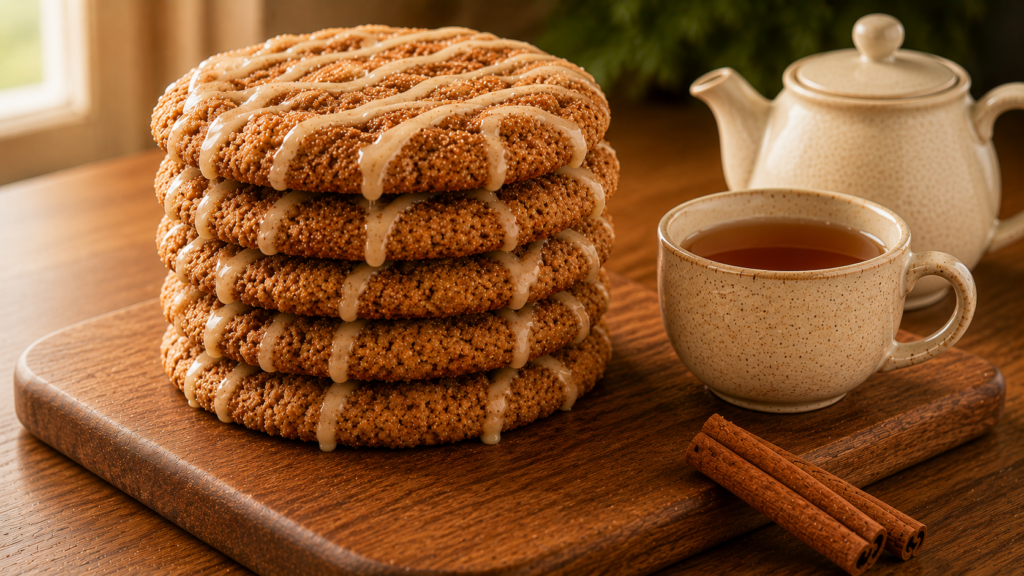
A maple vanilla glaze drizzled over the top after baking locks in the breakfast reference with every bite.
Why You Will Love This Recipe
• Brown butter and a full tablespoon of ground cinnamon in the dough produce the signature warm, toasty flavor of French toast without any bread or custard required.
• An extra egg yolk added to the dough creates a rich, custardy texture in the baked cookie that mirrors the dense, egg-soaked interior of a properly made French toast slice.
• A two-ingredient maple vanilla glaze drizzled over the cooled cookies sets to a thin, crackled finish that delivers the maple syrup moment in every bite.
• The dough chills for only 30 minutes and bakes in under 12 minutes, making this one of the faster specialty cookie recipes that still delivers a complex, layered flavor.
• These cookies stay soft and chewy for three days at room temperature, and the cinnamon flavor deepens noticeably after the first day as it blooms into the surrounding dough.
Ingredients
For the cookie dough:
• 1/2 cup unsalted butter, browned and cooled to room temperature
• 3/4 cup light brown sugar, packed
• 1/4 cup granulated sugar
• 1 large egg plus 1 egg yolk, room temperature
• 2 teaspoons vanilla extract
• 1 teaspoon maple extract (or 1 tablespoon pure maple syrup)
• 1 and 3/4 cups all-purpose flour
• 1 tablespoon ground cinnamon
• 1/2 teaspoon baking soda
• 1/4 teaspoon ground nutmeg
• 1/4 teaspoon salt
• 1 tablespoon milk or heavy cream
For the cinnamon sugar roll (optional but recommended):
• 3 tablespoons granulated sugar
• 1 teaspoon ground cinnamon
For the maple vanilla glaze:
• 1 cup powdered sugar, sifted
• 3 tablespoons pure maple syrup
• 1/2 teaspoon vanilla extract
• 1 to 2 tablespoons whole milk, to thin if needed
• Pinch of salt

Crockery and Time To Create
• Equipment: Two baking sheets, parchment paper or silicone mats, small saucepan for browning butter, large mixing bowl, hand mixer or stand mixer, rubber spatula, cookie scoop, small bowl for cinnamon sugar roll, small bowl and fork for glaze, wire rack
• Prep time: 15 minutes
• Chill time: 30 minutes
• Bake time: 10 to 12 minutes per batch
• Total time: approximately 1 hour
• Servings: 20 to 22 cookies
Ingredient Substitutions and Variations
• Maple extract: Pure maple syrup stirred directly into the dough in place of maple extract works well. Use 1 tablespoon and reduce the milk by the same amount to keep the dough consistency balanced.
• Brown butter: Regular softened butter produces a good result but the brown butter is specifically what creates the toasty, slightly caramelized undertone that makes these taste like French toast rather than a cinnamon cookie.
• All-purpose flour: A 1:1 gluten-free flour blend substitutes directly. The texture is slightly more delicate but the cookies hold together once fully cooled.
• Maple syrup in glaze: Honey replaces maple syrup for a floral, milder glaze with a similar consistency. The maple reference in the final cookie is less pronounced but still pleasant.
• Cinnamon sugar roll: Rolling the dough balls in cinnamon sugar before baking adds a crackled, slightly crunchy exterior crust that contrasts with the chewy center. It is optional but adds a visual and textural dimension worth including.
Step-by-Step Instructions
Step 1: Brown the butter in a small light-colored saucepan over medium heat, swirling often, until the milk solids turn a deep golden brown and the butter smells nutty and toasted, about 4 to 5 minutes. Pour into a large mixing bowl and spread it up the sides to speed cooling. Let it cool to room temperature, about 15 to 20 minutes, until solid around the edges and soft in the center.
Step 2: Beat the cooled brown butter with both sugars on medium speed for 2 minutes until the mixture lightens slightly in color and becomes fluffy. Add the egg, egg yolk, vanilla extract, and maple extract and beat for another full minute until the mixture is smooth, cohesive, and slightly glossy. Scrape down the bowl.
Step 3: Add the flour, cinnamon, baking soda, nutmeg, and salt to the bowl. Mix on low speed until the flour just disappears and no dry streaks remain. Add the tablespoon of milk and mix briefly to bring the dough together into a soft, slightly tacky consistency. Do not overmix. The dough will smell strongly of cinnamon and brown butter at this stage, which is exactly right.
Step 4: Cover the bowl tightly with plastic wrap and refrigerate the dough for 30 minutes. This chilling time is what keeps the cookies from spreading too flat during baking and allows the cinnamon to begin blooming into the dough.
Step 5: Preheat your oven to 350 degrees F (175 degrees C) while the dough chills. Line two baking sheets with parchment paper. If making the cinnamon sugar roll, mix the 3 tablespoons of granulated sugar and 1 teaspoon of cinnamon together in a small shallow bowl.
Step 6: Scoop the chilled dough into portions of about 1 and a half tablespoons each. If rolling in cinnamon sugar, roll each dough ball between your palms until smooth and then roll it through the cinnamon sugar mixture until evenly coated on all sides. Place the portions 2 inches apart on the prepared baking sheets. Do not flatten.

Step 7: Bake for 10 to 12 minutes until the edges are set and the tops look just barely done with a slight sheen in the center. The cookies will look underdone when they come out, which is correct. Leave them on the baking sheet for 5 full minutes before transferring to a wire rack; they firm up considerably during this rest.
Step 8: Make the maple vanilla glaze once the cookies are completely cool. Whisk the sifted powdered sugar, maple syrup, vanilla, and a pinch of salt together until smooth. Add milk one tablespoon at a time only if the glaze is too thick to fall in a slow ribbon from a fork. Drizzle over the cooled cookies using a fork or a piping bag in irregular back-and-forth lines. Allow the glaze to set for 10 to 15 minutes before stacking or storing.

Pro Tips for Best Results
• Use a full tablespoon of cinnamon in the dough rather than a teaspoon; the quantity sounds high but it is precisely what creates the French toast flavor profile rather than a generic cinnamon cookie result.
• The extra egg yolk is not optional for texture; it adds the fat and richness that produces the custardy, dense chew that mirrors the interior of egg-soaked French toast bread.
• Do not skip the 30-minute chill; the brown butter in the dough is still soft enough after cooling to cause excess spread if baked immediately. The chill time is what holds the domed shape through the first minutes of baking.
• Pull the cookies at 10 minutes for a softer, chewier result and at 12 minutes for a slightly crispier edge with a more set center. Both are correct depending on your texture preference.
• Apply the maple glaze only once the cookies are fully cool; glaze drizzled over a warm cookie soaks in rather than setting on the surface and the maple flavor becomes less distinct.
Common Mistakes to Avoid
• Using too little cinnamon: A standard teaspoon of cinnamon in a batch of cookies disappears into the background. The tablespoon called for here is deliberate and necessary for the French toast flavor to come through clearly in the baked cookie.
• Skipping the maple extract or maple syrup: Vanilla alone does not carry the French toast reference across the full cookie. The maple element is what separates this from a cinnamon brown butter cookie and gives it the breakfast identity it is named after.
• Baking without chilling: Warm dough spread with brown butter bakes too fast and too wide, producing flat cookies with a greasy edge and a raw center. The 30 minutes in the refrigerator is not a suggestion.
• Moving cookies before they firm up: These cookies are fragile directly out of the oven because the brown butter and egg yolk stay soft until they cool. Moving them before the 5-minute rest on the hot sheet causes them to break at the center.
• Glazing too early: Warm cookies absorb the maple glaze into the surface. The glaze must be applied to fully cooled cookies to sit on the surface and set to a crackled, visible finish.
What to Serve With
• Hot coffee or a flat white: The bitterness of coffee cuts cleanly through the maple sweetness of the glaze and amplifies the brown butter and cinnamon notes in the cookie itself.
• A small pitcher of warm maple syrup on the side: Offering extra maple syrup for dipping leans fully into the French toast concept and gives guests who want more sweetness exactly that without changing the cookie.
• Fresh berries on the side of the plate: Sliced strawberries or a small handful of blueberries alongside the cookies adds a bright, acidic contrast that balances the richness of the brown butter dough and maple glaze.
Storage and Reheating
• Room temperature: Store in an airtight container in a single layer for up to 3 days. Place parchment between layers if stacking once the glaze has fully set. The cinnamon flavor deepens by day two.
• Refrigerator: Store covered for up to 6 days. Bring to room temperature for 15 minutes before serving; cold cookies lose some of their chew.
• Freezer: Freeze baked unglazed cookies in a single layer until solid, then transfer to a freezer bag for up to 2 months. Thaw at room temperature and apply fresh glaze before serving.
• Freeze raw dough: Scoop and roll portioned dough balls, freeze on a lined sheet until solid, then bag. Bake from frozen at 350 degrees F for 13 to 14 minutes. Roll in cinnamon sugar just before placing on the sheet if using.
Nutrition Information
| Nutrient | Per Serving |
| Calories | 185 kcal |
| Total Fat | 9g |
| Saturated Fat | 5g |
| Cholesterol | 45mg |
| Sodium | 130mg |
| Total Carbohydrates | 24g |
| Dietary Fiber | 0g |
| Sugars | 14g |
| Protein | 3g |
| * Percent daily values are based on a 2,000 calorie diet. Nutritional values are estimates only and may vary based on specific ingredients and portion sizes used. | |
Health Benefits
Ground cinnamon at the quantity used in this recipe delivers a meaningful dose of polyphenol antioxidants per cookie, specifically cinnamaldehyde and procyanidins, compounds that have been studied for their role in reducing oxidative stress and supporting healthy blood sugar regulation after meals. At a tablespoon per batch, each cookie contains more active cinnamon compound than most recipes that use cinnamon purely as a background spice.
Pure maple syrup in the glaze provides trace amounts of manganese, zinc, and riboflavin alongside its natural sugars. Unlike refined white sugar, maple syrup retains small quantities of these minerals from the original sap, making it a marginally more nutritious sweetener choice in a recipe where its flavor is already the primary reason for using it.
Conclusion
These French toast cookies are the kind of recipe that surprises people because the concept sounds more novelty than serious, and then the first bite changes that impression immediately. The brown butter, the generous cinnamon, the custardy chew from the egg yolk, and the maple glaze all land exactly where they should. Make them when you want something that tastes considered, tastes like a specific thing, and takes under an hour from start to finish. Save the recipe and come back to it whenever the craving for French toast arrives at a moment when a skillet is less appealing than a baking sheet.