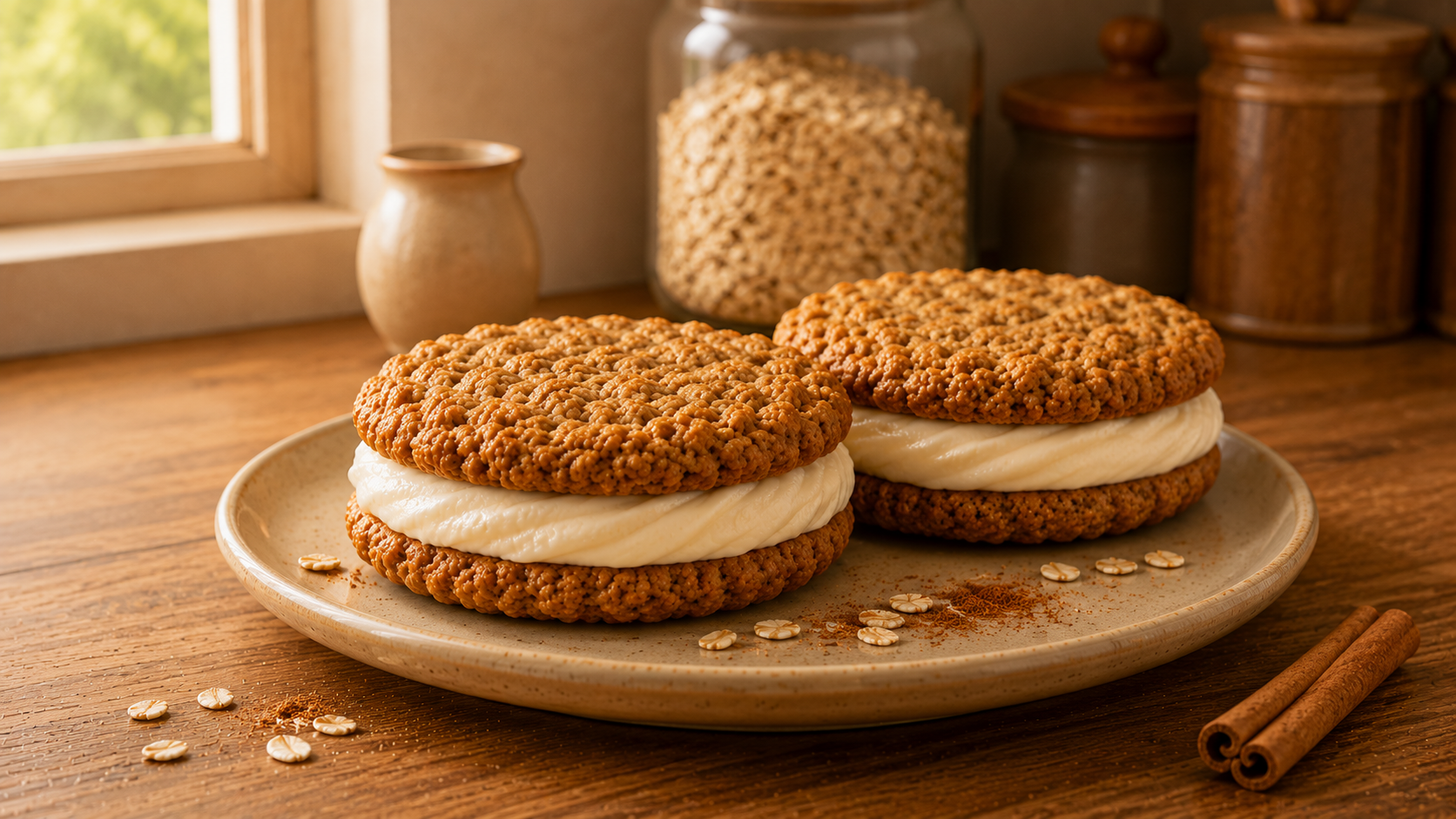
Chewy Homemade Oatmeal Cream Pies With Vanilla Buttercream
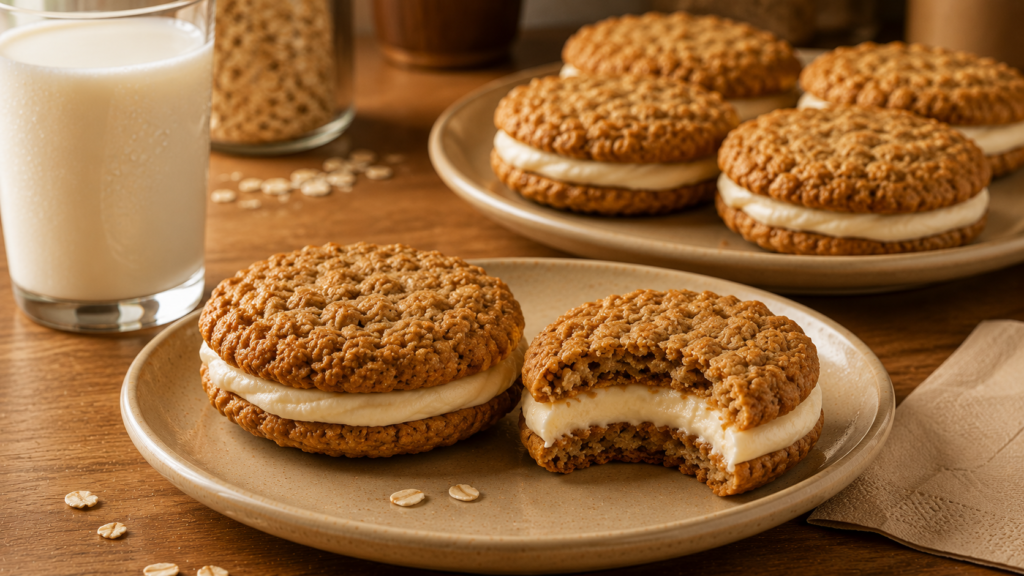
The first time I made oatmeal cream pies from scratch, the filling was the revelation. Store-bought versions taste like shortening and sugar. A properly made vanilla buttercream between two chewy, molasses-laced oatmeal cookies is an entirely different experience, richer and more layered in a way the original never quite manages.
The cookies themselves need to be flat and chewy, not cakey, for the sandwich to work properly. That means getting the butter, molasses, and oat ratio right so each cookie bends slightly rather than crumbles when you press the halves together.
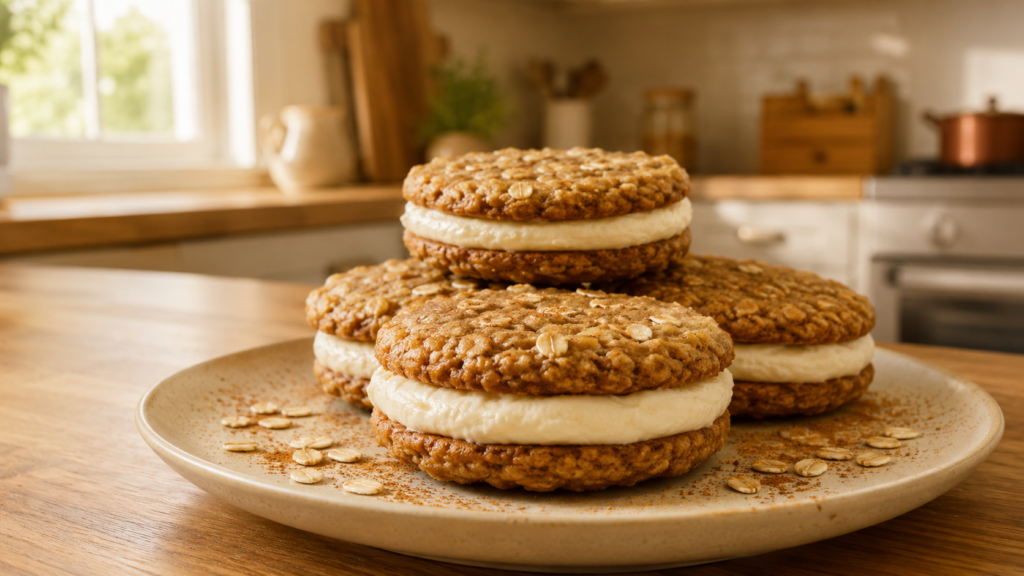
Why You Will Love This Recipe
- These oatmeal cream pies use old-fashioned rolled oats and a touch of molasses, delivering the deep, slightly caramelized flavor that makes the classic version so recognizable and impossible to put down.
- The vanilla buttercream filling is light, fluffy, and properly sweet without being cloying, balancing the earthy, spiced oatmeal cookies on both sides.
- The cookies stay soft and pliable for days without drying out, which is the specific texture a cream pie sandwich needs to hold together without cracking when bitten.
- This recipe makes a generous batch that stores well, making it practical for gifting, bake sales, or keeping a stack in the refrigerator for the week.
- No specialty equipment or ingredients are required beyond a hand mixer and standard pantry staples.
Ingredients
For the oatmeal cookies:
- 1 cup (225g) unsalted butter, softened to room temperature
- 3/4 cup (150g) light brown sugar, packed
- 1/2 cup (100g) granulated sugar
- 2 large eggs, room temperature
- 1 tablespoon molasses (not blackstrap)
- 1 teaspoon pure vanilla extract
- 1 and 1/2 cups (190g) all-purpose flour
- 1 teaspoon baking soda
- 1 teaspoon ground cinnamon
- 1/2 teaspoon ground nutmeg
- 1/2 teaspoon salt
- 3 cups (270g) old-fashioned rolled oats (not instant)
For the vanilla buttercream filling:
- 3/4 cup (170g) unsalted butter, softened to room temperature
- 2 and 1/2 cups (300g) powdered sugar, sifted
- 3 tablespoons heavy cream or whole milk
- 1 and 1/2 teaspoons pure vanilla extract
- 1/4 teaspoon salt
- 1 tablespoon marshmallow fluff (optional, adds that signature slightly sticky sweetness)

Crockery and Time To Create
Equipment needed: Stand mixer or hand mixer, two large mixing bowls, rubber spatula, baking sheets, parchment paper, medium cookie scoop or tablespoon, flat-bottomed glass for pressing cookies, wire cooling rack, piping bag or zip-lock bag for filling.
Prep time: 25 minutes Bake time: 10 to 12 minutes per batch Total time: approximately 50 minutes plus 20 minutes cooling Servings: 14 to 16 assembled cream pies
Ingredient Substitutions and Variations
- Molasses: This single tablespoon is what gives the cookies their characteristic deep amber color and that slightly caramelized undertone. Dark brown sugar used in place of light brown will partially replicate this but the molasses flavor is noticeably more pronounced when used directly.
- Old-Fashioned Rolled Oats: Do not substitute quick oats. They absorb moisture differently and produce a softer, mushier cookie that does not have the right chew for a sandwich pie format.
- Heavy Cream (filling): Whole milk works as a direct substitute in the filling. The buttercream will be slightly less rich but still spreads and sets properly.
- Marshmallow Fluff: This is optional but recommended. It adds a very subtle sticky sweetness to the filling that closely mimics the texture of the commercial cream pie filling without being identifiable on its own.
- Cinnamon and Nutmeg: Reducing the cinnamon to 1/2 teaspoon and omitting the nutmeg gives a more neutral oatmeal cookie base that lets the filling flavor come forward more prominently.
- Vanilla Extract (filling): Vanilla bean paste at the same quantity adds visible specks and a more intense vanilla presence in the white buttercream that looks impressive against the dark oatmeal cookies.
Step-by-Step Instructions
Step 1: Preheat and prepare. Set your oven to 350°F (175°C). Line two baking sheets with parchment paper and set aside. Make sure your butter and eggs are at genuine room temperature before beginning.
Step 2: Cream butter and sugars. In your large mixing bowl, beat the softened butter with both sugars on medium-high speed for 3 minutes until pale, light, and fluffy. Scrape down the bowl once halfway through. This step directly determines the texture of the finished cookie so give it the full time.
Step 3: Add wet ingredients. Beat in the eggs one at a time, allowing each to fully incorporate before adding the next. Add the molasses and vanilla extract and mix on medium until everything is smooth and evenly combined, about 30 seconds. The mixture will look a warm amber-brown color at this stage.
Step 4: Mix in dry ingredients. Add the flour, baking soda, cinnamon, nutmeg, and salt and mix on low speed just until no dry streaks remain. The dough will be thick and slightly sticky. Add the rolled oats and mix on low until they are evenly distributed throughout the dough. Do not overmix once the oats go in.
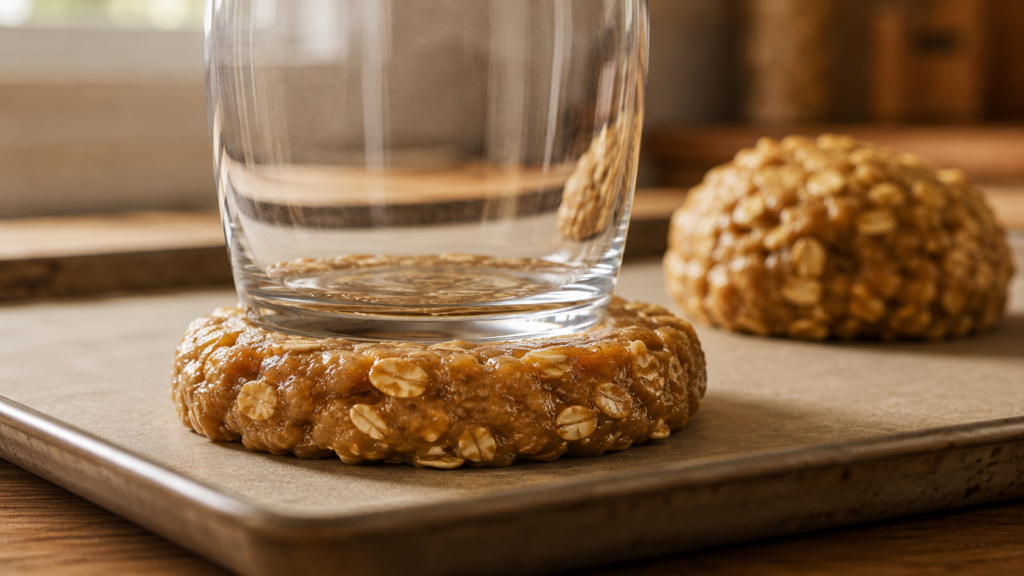
Step 5: Scoop and flatten. Using a medium cookie scoop, portion the dough onto the prepared baking sheets, spacing cookies about 2 and 1/2 inches apart. These cookies need to be flat to sandwich properly, so press each dough ball down gently with the flat bottom of a glass until it is about 1/2 inch thick. They will spread slightly further in the oven.
Step 6: Bake. Bake for 10 to 12 minutes until the edges are set and golden brown and the centers look barely done. The cookies should look soft and slightly underbaked in the center when you pull them. They will firm up and flatten further on the hot pan. For the most even color, rotate the baking sheets front to back halfway through the baking time.
Step 7: Cool completely. Let the cookies rest on the baking sheet for 5 full minutes before transferring to a wire rack. They need to cool completely to room temperature before filling. A warm cookie will melt the buttercream and the filling will slide out when the sandwich is pressed together.
Step 8: Make the vanilla buttercream. Beat the softened butter on medium-high for 2 minutes until pale and smooth. Add the sifted powdered sugar, heavy cream, vanilla extract, salt, and marshmallow fluff if using. Beat on low until combined, then increase to medium-high and beat for 3 minutes until the filling is very light, fluffy, and brilliant white. It should hold a soft peak and be spreadable but not runny.
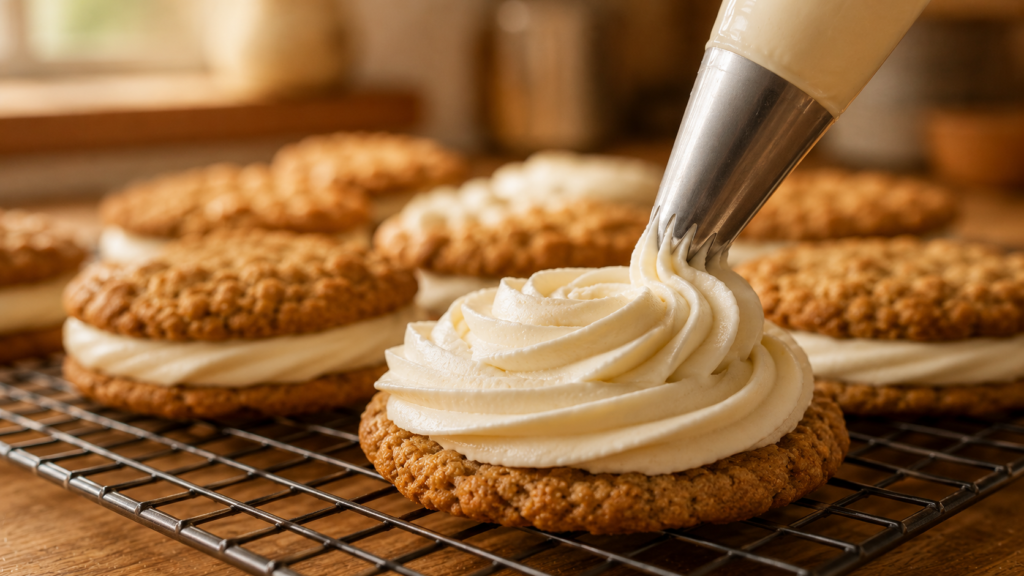
Step 9: Assemble the cream pies. Match cookies into pairs of similar size. Pipe or spoon a generous amount of buttercream filling onto the flat side of one cookie from each pair. Place the matching cookie on top, flat side down, and press very gently until the filling reaches the edges. Do not press hard or the filling will squeeze out entirely. Repeat with remaining pairs.
Step 10: Set and serve. The assembled cream pies can be served immediately or refrigerated for 30 minutes to allow the filling to firm slightly, which makes them easier to pick up and eat without the filling sliding.
Pro Tips for Best Results
- Press the dough balls before baking rather than relying on natural spread. Oatmeal cookie dough with this much butter does spread, but pre-flattening ensures uniform thickness across every cookie, which is critical for a sandwich that sits evenly.
- Pair cookies before filling by laying them all flat side up and matching them by size. Mismatched sizes make assembly awkward and the finished pies look uneven.
- Beat the buttercream for the full 3 minutes after the powdered sugar goes in. Under-beaten filling is dense and heavy and does not have the light, airy texture that makes these pies feel special.
- Slightly underbaking by 1 minute is always correct for oatmeal cream pies. A fully baked cookie that looks done in the oven will be crisp by the time it is cool, and a crisp cookie cracks at the center when you bite into the sandwich.
- Chill the assembled pies for 20 minutes before stacking or bagging for gifting. The filling firms just enough to hold its shape without squeezing out under pressure.
- The molasses is measured in tablespoons not cups. Do not accidentally add more. Even one extra tablespoon shifts the flavor from warm and complex to bittersweet and overpowering.
Common Mistakes to Avoid
- Using instant oats instead of old-fashioned rolled oats. Instant oats create a soft, almost paste-like texture in the baked cookie that has no chew and collapses the moment the sandwich is pressed together. Old-fashioned oats are the only correct choice here.
- Filling warm cookies. Even slightly warm cookies melt the buttercream immediately. The filling slides to one side, the sandwich pulls apart, and the whole thing looks sloppy. Always wait for full room temperature cooling.
- Overpressing when assembling. The filling should reach the edges from gentle pressure only. Hard pressing squeezes the buttercream out completely and leaves you with dry oatmeal cookie sandwiches.
- Under-beating the buttercream. Heavy, dense filling makes the cream pies feel cloying and stiff. The buttercream needs a full 3 minutes of beating after the powdered sugar goes in to reach the right airy, fluffy texture.
- Skipping the molasses. This is the ingredient that separates a memorable oatmeal cream pie from a forgettable oatmeal cookie sandwich. It is one tablespoon and it makes the entire difference in flavor depth.
What to Serve With
- Cold whole milk: The most natural and satisfying pairing for any oatmeal cookie, and the cool milk cuts through the sweetness of the buttercream in every bite without competing with the flavors.
- Hot black coffee or Americano: The bitterness of a dark roast works beautifully against the molasses and cinnamon in the cookies, making the warm spice notes come forward in a way they do not when eaten alone.
- Warm apple cider: Particularly suited to autumn and winter servings of these pies, the apple and cinnamon notes echo the spice profile of the cookie in a way that feels completely intentional and seasonal.
Storage and Reheating
- Room temperature: Store assembled cream pies in an airtight container for up to 4 days. Layer with parchment paper between pies to prevent the filling from bonding the cookies together.
- Refrigerator: Refrigerating firms the filling and keeps the pies fresher for up to 7 days. Remove from the refrigerator 10 to 15 minutes before serving to allow the filling to soften slightly.
- Freezer: Freeze assembled pies individually wrapped in plastic wrap, then in a freezer bag, for up to 2 months. Thaw in the refrigerator overnight or at room temperature for 30 minutes.
- Unassembled storage: Baked unfilled cookies store in an airtight container at room temperature for up to 5 days. Fill on the day you plan to serve for the best texture.
Nutrition Information
| Nutrient | Per Serving (1 assembled pie) |
|---|---|
| Calories | 486 kcal |
| Total Fat | 24.1g |
| Saturated Fat | 14.6g |
| Carbohydrates | 65.2g |
| Sugar | 42.8g |
| Protein | 4.9g |
| Fiber | 2.6g |
| Sodium | 148mg |
| Nutrition values are estimates based on standard ingredients. Actual values may vary depending on brands and portion sizes used. | |
Health Benefits
Old-fashioned rolled oats are one of the most fiber-dense ingredients you can include in a baked good. The beta-glucan fiber they contain has been consistently linked in research to supporting healthy cholesterol levels and sustained satiety, which means the oats in these cookies contribute something genuinely functional alongside the indulgence.
Molasses, even in the small tablespoon quantity used here, is a meaningful source of iron, calcium, and potassium that refined sugar entirely lacks. It is the one sweetener in everyday baking that actually adds trace minerals rather than subtracting nutritional value, which makes it worth reaching for wherever its flavor suits the recipe.
Conclusion
Homemade oatmeal cream pies are one of those recipes that changes the way you think about a familiar thing. Once you have made the real version with proper molasses cookies and a whipped vanilla buttercream, the store-bought original starts to taste like a rough draft of what these actually are. Make a full batch, pair them up carefully, and fill them generously. Save this recipe for any time someone asks you to bring something to a gathering, and let me know how quickly they disappear.