Pull-Apart Cheesy Breadsticks Recipe with Garlic Herb Butter
Bread dough for breadsticks needs to be softer than pizza dough and slightly wetter than a standard loaf dough. That specific texture is what lets the sticks pull apart cleanly at the table with that satisfying cheese stretch rather than breaking off in dry, dense chunks.
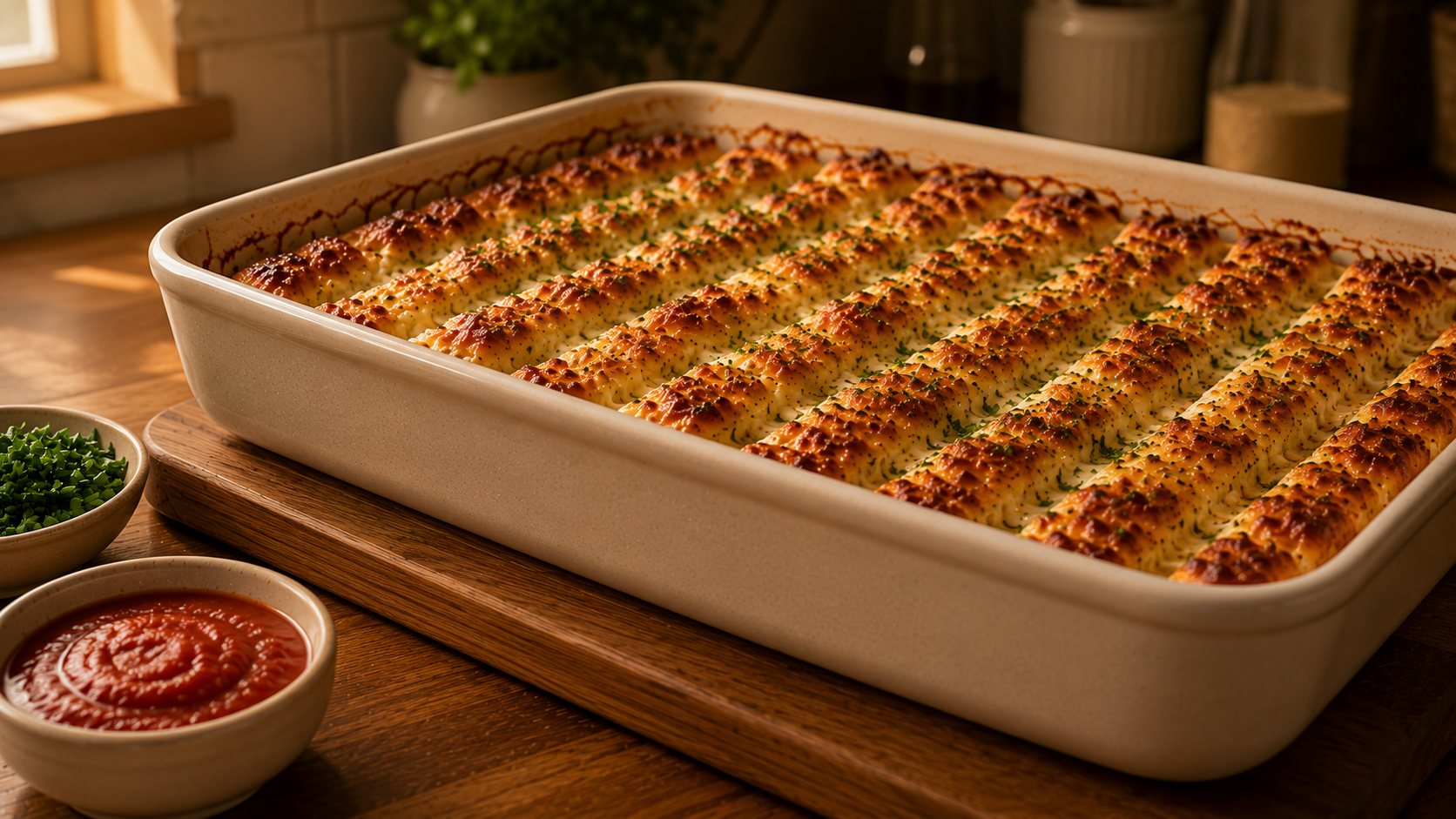
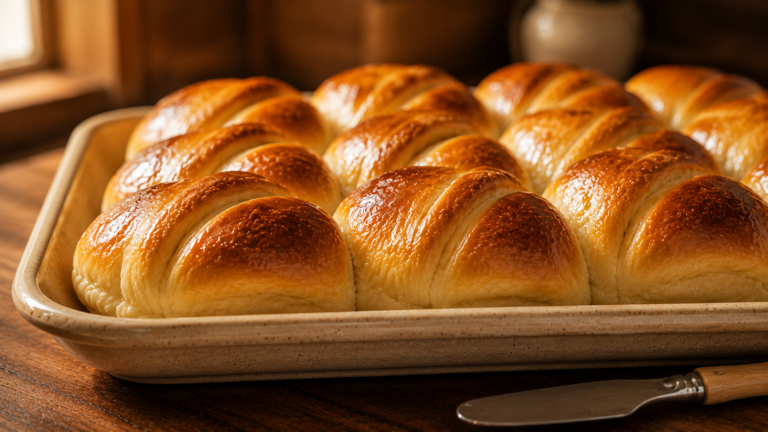
These cheesy breadsticks use a simple yeast dough brushed with garlic herb butter and loaded with mozzarella and Parmesan, baked until the cheese is blistered and golden at the edges.

Why You Will Love This Recipe
- A quick 45-minute yeast dough gives these breadsticks a genuinely light, airy interior with a slight chew that no baking powder shortcut can replicate.
- A double layer of cheese, one mixed into the garlic butter and one piled on top, ensures deep flavor through every bite rather than just a surface layer that slides off.
- The garlic herb butter soaks into the dough during baking and caramelizes at the edges where it meets the hot pan, creating a flavor that tastes far more complex than the ingredient list suggests.
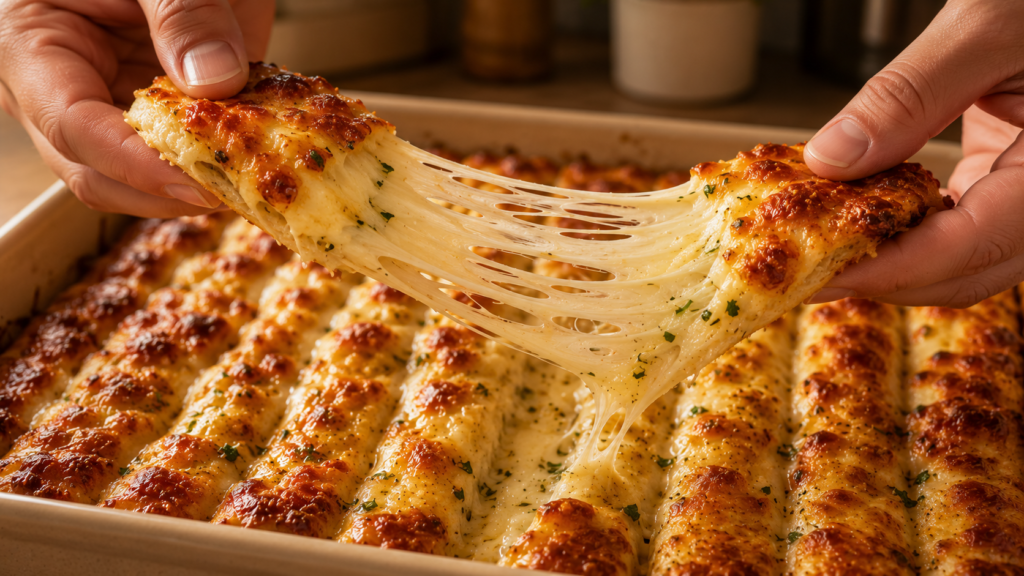
- Scored into strips before baking, the breadsticks pull apart at the table with long, dramatic cheese pulls that make them as fun to eat as they are to look at.
- They go from oven to table in under 90 minutes total, which makes them a realistic weeknight side rather than a weekend project.
Ingredients
For the dough:
- 2 and 1/4 teaspoons active dry yeast, one standard packet
- 1 teaspoon granulated sugar
- 3/4 cup warm water, between 105 and 110 degrees Fahrenheit
- 2 cups all-purpose flour, plus extra for dusting
- 1 teaspoon fine salt
- 1 tablespoon olive oil
For the garlic herb butter:
- 4 tablespoons unsalted butter, melted
- 3 garlic cloves, finely minced or grated
- 2 tablespoons fresh flat-leaf parsley, finely chopped
- 1/4 teaspoon dried oregano
- 1/4 teaspoon fine salt
- 1/4 teaspoon red pepper flakes, optional
For the cheese topping:
- 1 and 1/2 cups shredded low-moisture mozzarella, from a block not a bag
- 1/3 cup finely grated Parmesan cheese
- 1/4 teaspoon garlic powder
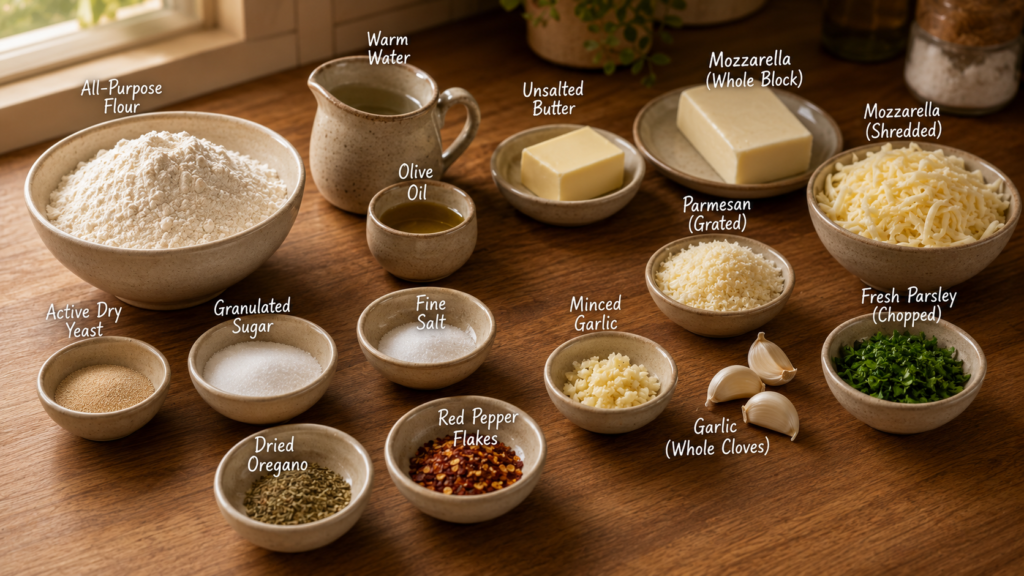
Shred your own mozzarella from a block every single time for this recipe. Pre-shredded mozzarella contains potato starch to prevent clumping in the bag, and that starch prevents the cheese from melting into a smooth, glossy pull. Block mozzarella melts completely and stretches properly.
Crockery and Time To Create
You will need one large mixing bowl, a 9 by 13 inch baking pan or a large rimmed baking sheet, a small saucepan or microwave-safe bowl for the garlic butter, a box grater, and a pastry brush. Total time is 1 hour 20 minutes including the dough rise. The recipe makes 12 to 16 breadsticks and serves 6 to 8 as a side.
Ingredient Substitutions and Variations
- Bread flour: replaces all-purpose flour and produces a slightly chewier, more structured breadstick with better gluten development and a more satisfying pull.
- Garlic powder: replaces fresh garlic in the butter at 1/2 teaspoon for a milder, more evenly distributed garlic flavor without any risk of raw garlic pieces burning on the surface.
- Provolone: replaces half the mozzarella and adds a sharper, more complex cheese flavor that melts equally well and adds depth to the overall topping.
- Fresh rosemary: replaces the dried oregano in the garlic butter for a more aromatic, piney herb note that works particularly well if serving alongside lamb or beef dishes.
- Everything bagel seasoning: replaces the garlic powder in the cheese topping and scattered over the top before baking for a seeded, sesame-forward crust variation.
Step-by-Step Instructions
- In a large mixing bowl combine the warm water, sugar, and yeast. Stir gently and leave to sit for 5 to 7 minutes until the surface is foamy and the yeast smells active and slightly yeasty. If nothing happens after 7 minutes, the water was too hot or cold, or the yeast is expired. Start again with fresh yeast.
- Add the flour, salt, and olive oil to the yeast mixture. Mix with a fork until a shaggy dough forms, then turn it out onto a lightly floured surface and knead for 5 to 6 minutes until the dough is smooth, slightly tacky, and springs back slowly when poked. It should be noticeably softer than pizza dough.
- Shape the dough into a ball and place it back in the lightly oiled mixing bowl. Cover with a clean damp towel and leave in a warm spot for 35 to 45 minutes until doubled in size.
- While the dough rises, make the garlic herb butter. Melt the butter in a small saucepan over low heat, add the minced garlic, and cook for 1 minute only until fragrant but not browned. Remove from heat and stir in the chopped parsley, dried oregano, salt, and red pepper flakes if using. Set aside.
- Preheat your oven to 425 degrees Fahrenheit. Lightly grease the baking pan with a thin layer of olive oil or butter.
- Punch the risen dough down gently to deflate it. Turn it out onto a lightly floured surface and press or roll it into a rectangle approximately the size of your baking pan, about 9 by 13 inches and roughly 1/2 inch thick. Transfer the dough rectangle to the prepared pan and press it into the corners.
- Brush the entire surface of the dough generously with the garlic herb butter, using all of it. In a small bowl toss together the shredded mozzarella, Parmesan, and garlic powder. Scatter the cheese mixture evenly across the entire buttered surface, taking it right to the edges of the dough.
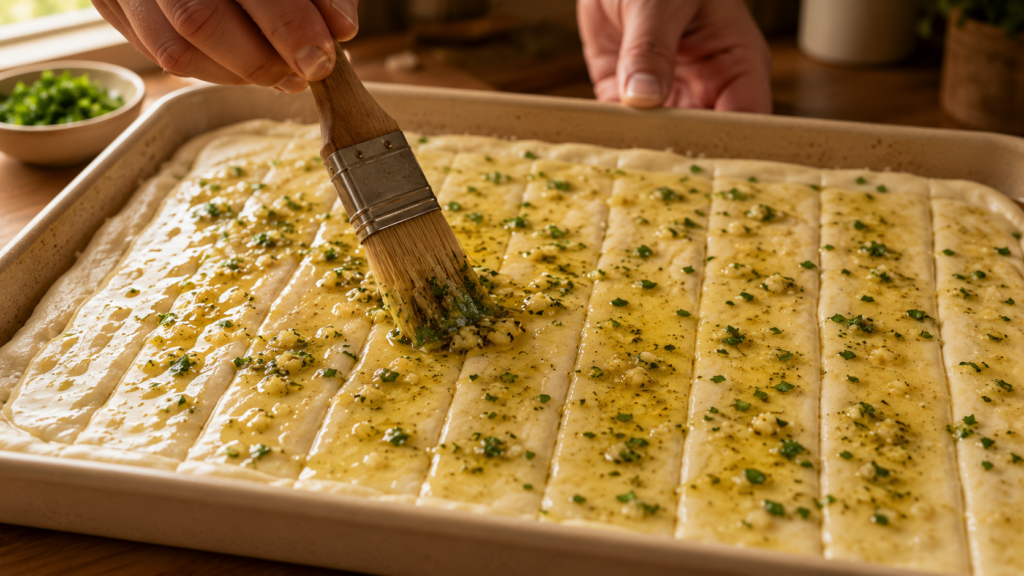
- Use a sharp knife or pizza cutter to score the cheese-covered dough into strips approximately 1 and 1/2 inches wide, cutting all the way through to the pan base. Do not separate the strips. The scoring is what allows them to pull apart cleanly after baking while keeping the whole sheet together during the oven.
- Bake for 14 to 18 minutes until the cheese is deeply golden and blistered in spots, the edges are browned and pulling slightly from the pan, and the exposed dough between the cheese is pale golden. Do not underbake — pale cheese and underbaked edges are the most common mistake with this recipe.
- Remove from the oven and rest in the pan for 3 minutes before serving. The cheese needs this brief rest to set slightly or it slides off when pulled apart.
Pro Tips for Best Results
- Proof the yeast properly before adding the flour, and look for genuine foam on the surface after 7 minutes. A yeast mixture that does not foam will produce flat, dense breadsticks regardless of how well everything else is done.
- Roll the dough to a consistent 1/2 inch thickness across the whole rectangle, because thinner areas will burn before thicker areas are cooked through and the texture will be uneven.
- Use all of the garlic herb butter on the dough surface even if it seems like a lot, because the butter soaks into the dough during baking and caramelizes at the scored edges to create the most flavorful parts of the whole batch.
- Score all the way through to the pan base before baking, not after. Post-bake scoring tears the melted cheese and pulls the topping off rather than cutting cleanly through it.
- Serve immediately from the pan while the cheese is still at its most stretchy and the crust is at its crispest. Cheesy breadsticks decline quickly and are always best eaten hot.
Common Mistakes to Avoid
- Using water that is too hot for the yeast: water above 115 degrees Fahrenheit kills yeast cells and the dough will not rise. Use a thermometer or test the water on your inner wrist. It should feel warm, not hot.
- Under-proofing the dough: a dough that has not doubled in size will produce dense, bready sticks without the light, airy interior that makes pull-apart breadsticks worth making. Wait the full 45 minutes if needed.
- Using pre-shredded mozzarella: the anti-caking starch prevents proper melting and you will get a clumpy, slightly dry topping rather than a glossy, stretchy cheese pull.
- Cutting the breadsticks apart before the 3-minute rest: the cheese is still fully liquid at the moment the pan comes out of the oven. The brief rest allows it to set slightly so it stretches rather than runs.
What to Serve With
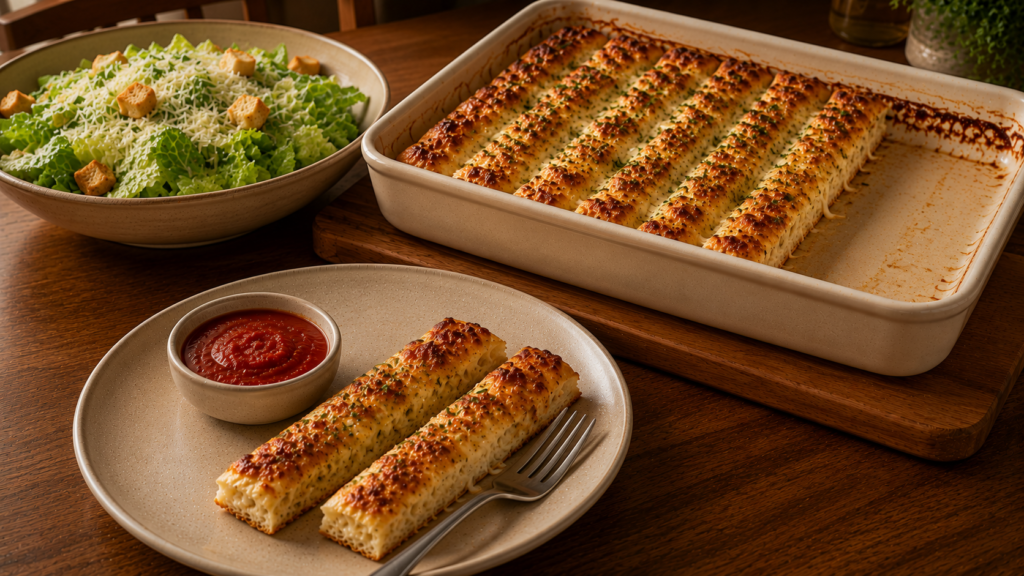
- Marinara dipping sauce: the classic pairing, and the acidity of a good tomato sauce against the rich garlic butter and melted mozzarella is genuinely difficult to improve on.
- Caesar salad: the sharp, creamy dressing and the crisp romaine alongside warm, pull-apart cheesy breadsticks makes a complete and deeply satisfying meal from very little effort.
- Beef meatball soup: the breadsticks work beautifully as a dunking bread alongside any brothy, tomato-based soup, the garlic butter enriching every spoonful they touch.
Storage and Reheating
- Room temperature: store cooled breadsticks in an airtight container or wrapped in foil for up to 1 day. The cheese firms up as they cool but the flavor holds well.
- Fridge: refrigerate for up to 3 days. The dough tightens slightly in the cold but reheats well.
- Freezer: freeze fully baked and cooled breadsticks in a sealed bag for up to 2 months. Reheat from frozen without thawing.
- Reheating: warm in a 375 degree Fahrenheit oven for 6 to 8 minutes until the cheese re-melts and the edges re-crisp. An air fryer at 350 degrees Fahrenheit for 3 to 4 minutes produces the best re-crisped result. Avoid the microwave which makes the dough soft and the cheese rubbery.
Nutrition Information
| Nutrient | Per Serving (2 breadsticks) |
|---|---|
| Calories | 312 kcal |
| Carbohydrates | 34 g |
| Protein | 13 g |
| Fat | 14 g |
| Saturated Fat | 8 g |
| Cholesterol | 38 mg |
| Sodium | 420 mg |
| Fiber | 1 g |
| Sugar | 1 g |
| Nutrition values are estimates only and will vary based on specific ingredients and portion sizes used. | |
Health Benefits
Mozzarella and Parmesan together provide a meaningful amount of calcium and complete protein per serving, with Parmesan in particular being one of the more concentrated cheese sources of both nutrients due to its low moisture content. The yeast dough base, made with olive oil rather than butter, contributes heart-healthy monounsaturated fats that replace some of the saturated fat that a butter-based dough would add.
Fresh garlic in the herb butter adds more than flavor. Allicin, the active compound released when garlic is minced or crushed, has well-documented antimicrobial and cardiovascular benefits. Even the brief cooking in butter preserves a portion of these compounds, meaning the garlic herb butter does something useful beyond making the breadsticks taste exceptional.
Conclusion
Pull-apart cheesy breadsticks are the kind of thing that disappears from the pan before you have had a chance to sit down, and that is exactly how they are supposed to be eaten. Make them for a family dinner, bring them to a gathering, or make a batch on a Tuesday because Tuesday deserves something good on the table. Save the recipe and double it the second time, because you will wish you had more.