Crispy Skillet Bannock Bread Recipe with Golden Buttery Crust
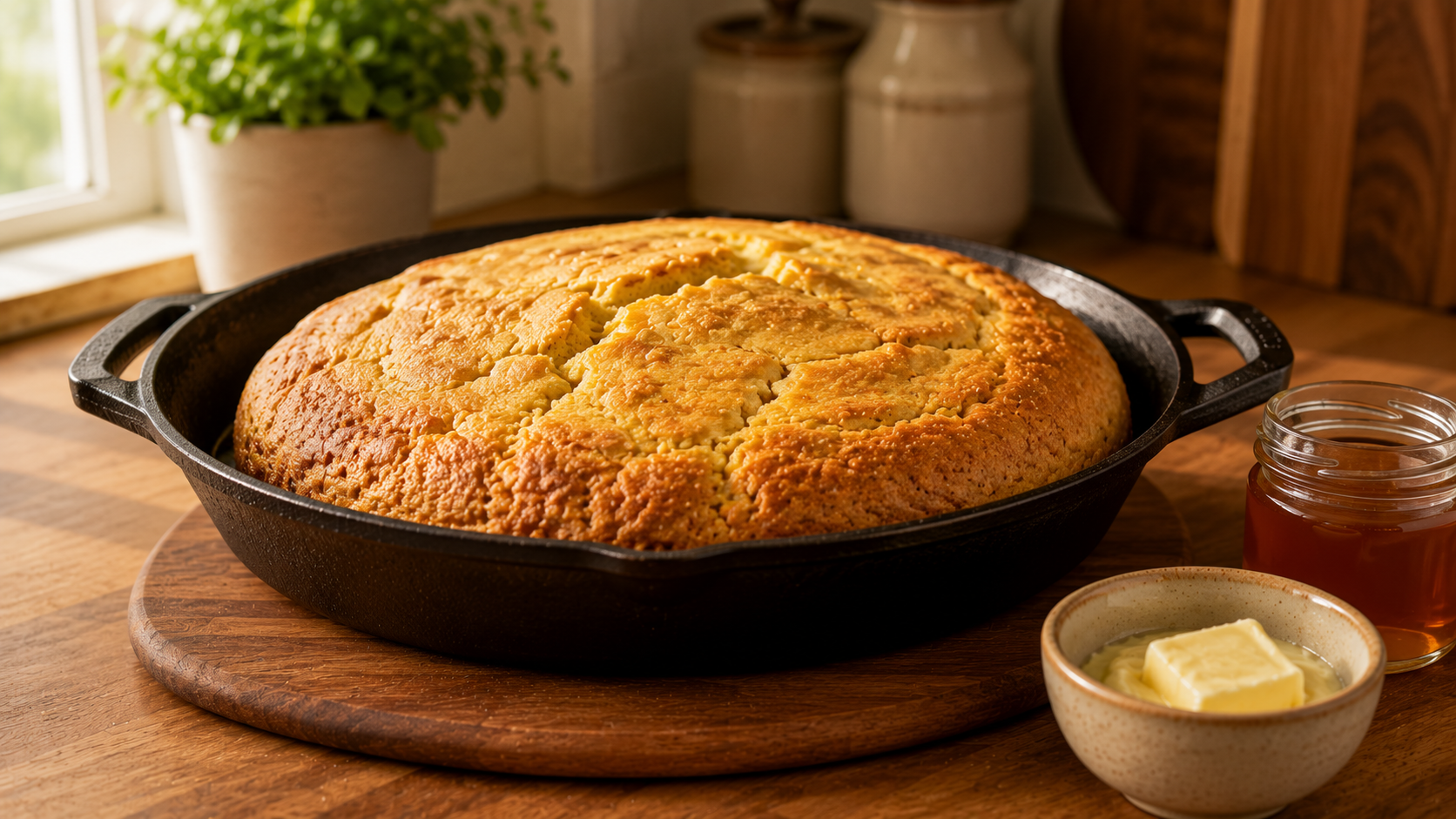
The first time I made bannock I did it wrong on purpose — too much butter in the pan, heat too high — and it turned out to be exactly right. The bottom crust blistered golden and the inside stayed soft and doughy in a way that no oven bread ever quite replicates.
Bannock is the kind of bread that rewards confidence over precision. Mix, shape, cook, and eat it warm.

Why You Will Love This Recipe
- The entire bread goes from dry ingredients to table in under 30 minutes with no yeast, no rising time, and no oven required if you use the skillet method.
- A cast iron skillet develops a deeply golden, slightly crisp bottom crust that gives this bread a satisfying contrast between the crunchy exterior and the soft, pillowy interior.
- The recipe uses only five pantry staples that most kitchens already have, which makes it genuinely useful as an emergency bread on any day of the week.
- Bannock is endlessly adaptable — it works sweet with honey and butter, savory alongside stew, or plain and warm straight from the pan.
- The dough is forgiving in a way that yeast breads never are. Under-mixed, over-mixed, slightly too thick, slightly too thin — bannock handles all of it and still comes out well.
Ingredients
For the bannock bread:
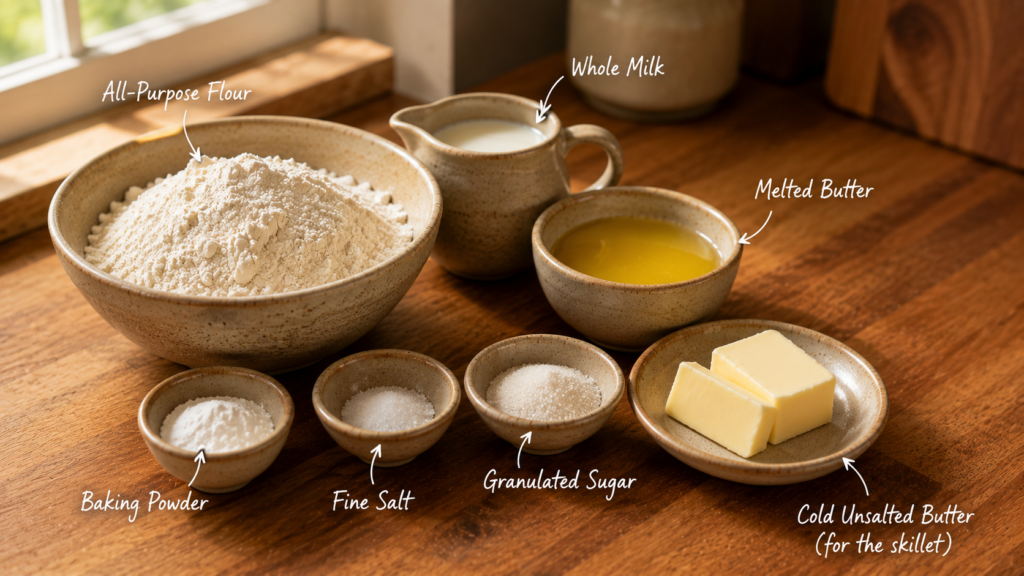
- 2 cups all-purpose flour
- 1 tablespoon baking powder
- 1/2 teaspoon fine salt
- 2 teaspoons granulated sugar
- 3/4 cup whole milk, at room temperature
- 3 tablespoons unsalted butter, melted and cooled slightly
- 2 tablespoons unsalted butter, for the skillet
Optional additions:
- 1/4 cup shredded cheddar cheese folded into the dough for a savory version
- 2 tablespoons honey stirred into the milk for a lightly sweet version
- 1 teaspoon dried rosemary or thyme worked into the dry ingredients for an herbed version
The amount of milk may need a slight adjustment depending on the flour you use. The dough should be soft, slightly sticky, and just barely manageable. If it tears when you try to press it into shape, add one more tablespoon of milk. If it sticks aggressively to everything, add one tablespoon of flour.
Crockery and Time To Create
You will need one 10 to 12 inch cast iron skillet or heavy-bottomed frying pan, one large mixing bowl, and a spatula or flat turner for flipping. Total time is 30 minutes from start to finish. The recipe makes one round loaf serving 4 to 6 people as a side.
Ingredient Substitutions and Variations
- Buttermilk: replaces whole milk and reacts with the baking powder to produce a slightly more tender, airy crumb with a mild tang that works well in both sweet and savory versions.
- Olive oil: replaces the melted butter in the dough for a slightly less rich but still tender result with a faintly savory undertone.
- Gluten-free all-purpose flour blend: replaces regular flour at the same volume for a gluten-free version that works surprisingly well, though the crumb will be slightly more crumbly and less chewy.
- Coconut milk: replaces whole milk for a subtly tropical version that pairs well with honey and a pinch of cinnamon folded into the dough.
- Dried cranberries and orange zest: fold into the dough for a sweet, fruity version that works beautifully as a breakfast bread alongside whipped butter.
Step-by-Step Instructions
- In a large mixing bowl whisk together the flour, baking powder, salt, and sugar until evenly combined. Make a well in the center of the dry ingredients.
- Pour the melted cooled butter and the milk into the well. Mix with a fork or your hands until a soft, slightly sticky dough forms. Do not overwork it — the dough should just come together with no dry flour remaining. It will look rough and shaggy rather than smooth, which is exactly right for bannock.
- Turn the dough out onto a lightly floured surface and press it gently with your palms into a round disc about 3/4 inch thick and roughly 9 to 10 inches across. Do not use a rolling pin. Pressing with your hands keeps the texture open and soft rather than dense.

- Melt the 2 tablespoons of skillet butter in a 10 to 12 inch cast iron skillet over medium-low heat, tilting the pan to coat the base evenly. When the butter is foaming and just beginning to smell nutty, carefully lift the shaped bannock disc and place it into the skillet.
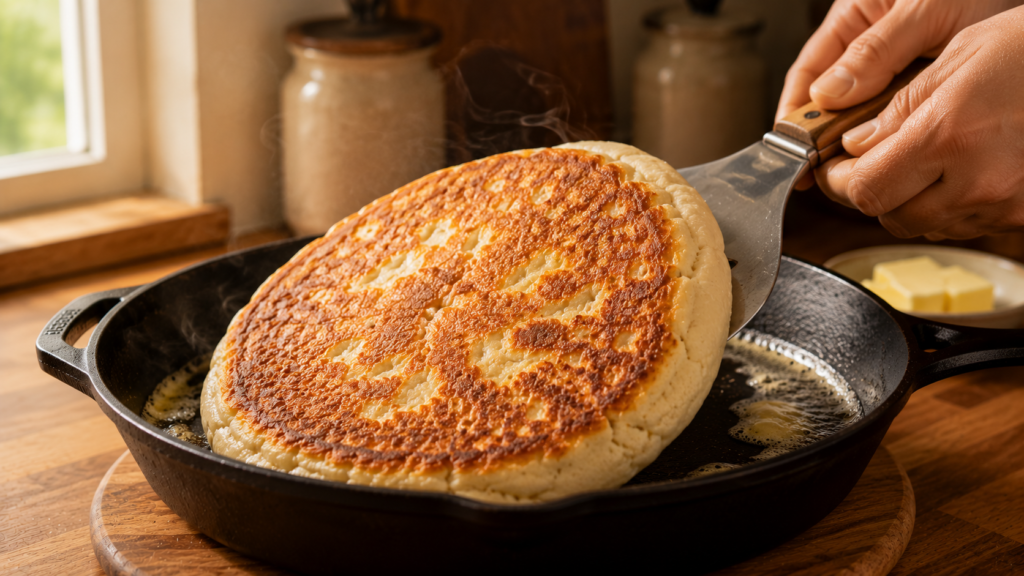
- Cook on the first side for 8 to 10 minutes over medium-low heat without moving it. The bottom should develop a deep golden crust and the edges will begin to look set and slightly matte rather than raw. Resist the urge to increase the heat. Bannock cooked too fast will be golden outside and raw inside.
- Carefully slide a wide spatula underneath the bannock and flip it in one confident motion. Cook the second side for a further 8 to 10 minutes until equally golden. The bannock is done when a toothpick inserted into the center comes out clean and the bread sounds slightly hollow when tapped on the base.
- Transfer to a wire rack or wooden board and rest for 5 minutes before tearing or slicing. Bannock is always best eaten warm.
Pro Tips for Best Results
- Keep the heat at medium-low throughout the entire cook. The long, gentle heat allows the inside to cook through fully while the outside develops its golden crust without burning.
- Use a cast iron skillet if you have one, because its heat retention and even distribution are what produce the characteristic deep golden bottom crust that defines a good bannock.
- Press the dough by hand rather than rolling it, because a rolling pin compresses the dough too tightly and produces a denser, tougher result.
- Do not peek or move the bannock during the first 8 minutes on each side, as lifting it early breaks the crust before it has formed and the bread sticks.
- Eat it the day it is made. Bannock does not store particularly well and is always at its best within an hour of coming out of the pan.
Common Mistakes to Avoid
- Cooking on too high a heat: the outside burns before the inside cooks. Medium-low is not a suggestion — it is the technique. Bannock is a slow cook, not a quick one.
- Overworking the dough: excess mixing develops gluten and produces a tough, chewy result. Mix only until the dough just comes together and stop there.
- Making the disc too thick: a disc much thicker than 3/4 inch will have trouble cooking through to the center before the outside over-colors. Keep it at 3/4 inch maximum.
- Skipping the rest time after cooking: cutting into bannock straight from the pan compresses the crumb before it has set. Five minutes of resting makes a noticeable difference to the final texture.
What to Serve With
- Beef stew or lamb stew: the soft, absorbent interior of bannock is made for tearing and dunking into a rich, brothy stew, which is the most traditional way to serve it.
- Wildflower honey and salted butter: the simplest serving and genuinely the one that shows off bannock’s flavor most clearly, especially while it is still warm enough to melt the butter on contact.
- Sharp cheddar and sliced tomato: a thick slice of bannock with cold cheddar and fresh tomato makes a complete, satisfying lunch with no other preparation needed.

Storage and Reheating
- Room temperature: wrap loosely in a clean dry cloth or store in a paper bag for up to 1 day. Bannock goes stale quickly and is best eaten the day it is made.
- Fridge: refrigerate wrapped for up to 2 days, though the texture will be noticeably drier and less soft than fresh.
- Freezer: freeze cooled bannock wrapped tightly for up to 1 month. Thaw at room temperature for 30 minutes before reheating.
- Reheating: warm in a dry skillet over low heat for 3 to 4 minutes per side to restore the crust, or wrap in foil and warm in a 325 degree Fahrenheit oven for 8 to 10 minutes.
Nutrition Information
| Nutrient | Per Serving (1 wedge) |
|---|---|
| Calories | 268 kcal |
| Carbohydrates | 38 g |
| Protein | 6 g |
| Fat | 10 g |
| Saturated Fat | 6 g |
| Cholesterol | 26 mg |
| Sodium | 285 mg |
| Fiber | 1 g |
| Sugar | 3 g |
| Nutrition values are estimates only and will vary based on specific ingredients and portion sizes used. | |
Health Benefits
Bannock made with whole milk and butter provides calcium, fat-soluble vitamins A and D, and a moderate amount of protein per serving, making it more nutritionally complete than many flatbreads made with water alone. The relatively short ingredient list means there are no additives, preservatives, or artificial leavening agents beyond baking powder, which makes it a cleaner option than most commercially produced breads.
For those adding cheese or dried fruit to the dough, the nutritional profile shifts accordingly. Cheddar adds a meaningful amount of protein and calcium per wedge, while dried cranberries contribute a small amount of fiber and antioxidants. As a simple pan bread eaten alongside a protein-rich stew or a salad, bannock fits comfortably into a balanced meal without requiring any adjustment.
Conclusion
Bannock is the most honest bread I know. No pretense, no long process, no special equipment, and it feeds people well every single time. Make it on a cold evening alongside a bowl of stew and I think you will understand immediately why this bread has been made in cast iron pans for centuries. Save it, share it, and make it anytime the bread box is empty and dinner needs something warm on the side.